Insulated vinyl siding pros and cons come up in almost every siding conversation we have with Pittsburgh homeowners. The product is standard vinyl siding with a rigid foam panel bonded to the back of each piece. It costs more than hollow vinyl, it is a little quieter and stiffer, and it adds a modest amount of insulation to the wall. Whether that is worth it depends on your house, your walls, and how long you plan to stay. We are Malick Brothers Exteriors, a family owned company founded in 2022 by Ryan Malick and based at 500 Perry Highway in West View. We install James Hardie fiber cement and Mastic vinyl siding across the North Hills and the city, so we see both sides of this decision on real houses every week. This guide covers what insulated siding does well, where it falls short, how it compares with fiber cement, and how to decide. If you are already weighing options for siding installation in Pittsburgh, the sections below will help you ask the right questions before you sign anything.
What Is Insulated Vinyl Siding?
Standard vinyl siding is a hollow profile with a small air gap behind it, which is why it can look wavy on an older house with uneven sheathing. Insulated vinyl siding adds a contoured layer of expanded polystyrene foam that is permanently glued to the back of the panel. The foam fills the space between the siding and the wall, so the panel sits flat and stiff instead of hollow.
The foam serves three purposes. It adds thermal resistance to the outside of the wall, it supports the vinyl face so the panel resists dents and sagging, and it dampens sound. Most major vinyl manufacturers offer an insulated line alongside their hollow profiles, and the two can look nearly identical from the curb once installed.
Insulated Vinyl Siding Pros
- Added R-value on the outside of the wall. Hollow vinyl contributes almost nothing to insulation, roughly R-0.6. Insulated vinyl typically adds between R-2 and R-4 depending on the profile and foam thickness. That number is small compared with the insulation inside the wall cavity, but it sits where the cavity insulation cannot reach.
- Less thermal bridging. Wall studs conduct heat straight through the wall, bypassing the batt insulation between them. A continuous foam layer on the exterior covers the studs. The U.S. Department of Energy describes exterior continuous insulation as one of the ways to reduce this heat loss on an existing home without opening the interior walls.
- Stiffer, flatter panels. The foam backing keeps the vinyl from oil canning or rippling over uneven sheathing. On a 1940s brick and frame house in Bellevue or a 1960s ranch in McCandless with waves in the old sheathing, that flatter look is the difference people notice first.
- Better impact resistance. A supported panel resists hail, a thrown ball, or a lawn mower rock better than a hollow one. Fewer cracks and dents over the years.
- Quieter interior. The dense foam cuts road noise. Homes along Perry Highway, McKnight Road or Route 19 benefit the most.
- Same low maintenance as regular vinyl. No painting or sealing. An occasional wash with a garden hose and mild soap is all it needs.
Insulated Vinyl Siding Cons and Drawbacks
- Higher upfront cost than hollow vinyl. The foam, the thicker panel and the slower installation all add to the quote. We do not publish numbers because the difference depends on your wall area, the number of windows and corners, and the profile you pick. We will put it in writing on a free estimate.
- Harder to install correctly. The panels are thicker and stiffer, so they take longer to cut and fit around windows, doors and trim. Flashing details at J channel and corners matter more because there is less room for error. An installer who has only hung hollow vinyl can make a mess of it.
- Moisture management is less forgiving. Hollow vinyl is vented and leaky by design, so the wall can dry outward. Foam backing fits tightly to the sheathing. The siding still needs a proper housewrap and flashing underneath so any water that gets behind it drains out. Most insulated profiles have drainage channels molded into the foam, but they only work if the layers below are installed right.
- Expansion and contraction. Vinyl grows and shrinks with temperature. Pittsburgh swings from single digits in January to the 90s in July. The foam and the vinyl face move at slightly different rates, and if the panels are nailed tight instead of loose, they can buckle. This is an installer problem more than a product problem, but it is real.
- It is still vinyl. It can melt near a grill or a reflective window and fades on a south wall over 15 to 20 years.
- The energy savings are modest. If your attic is under insulated or your windows leak, insulated siding will not fix that. R-2 to R-4 on the walls helps, but it is not a whole house energy retrofit.
Does Insulated Vinyl Siding Really Make a Difference?
Yes, but in the ways people expect least. The comfort and noise difference is noticeable right away. The energy difference shows up as a smaller change on the heating bill, and how much depends on what the wall looked like before.
A lot of houses in the North Hills were built between 1920 and 1970 with little or no wall insulation. On those homes, adding R-3 of continuous foam to a wall that had almost nothing is a meaningful improvement. On a home built after the 1990s with insulated 2x6 walls and good windows, the same R-3 is a smaller percentage gain, and the payback stretches out.
If energy is the main goal, ask what the wall is made of first. Sometimes the better move is dense pack cellulose in the cavities, or separate foam board under either vinyl or fiber cement. We will tell you which makes sense when we see the house.
Insulated Vinyl vs Fiber Cement Siding
This is the comparison that actually decides most of our siding jobs, so here is a plain view of it. We install both James Hardie fiber cement and Mastic vinyl, and we recommend each on different houses.
| Factor | Insulated vinyl siding | James Hardie fiber cement |
|---|---|---|
| What it is | Vinyl panel with bonded foam backing | Cement, sand and cellulose fiber board |
| Insulation value | Adds roughly R-2 to R-4 | Adds almost none on its own; pair with foam board if needed |
| Fire resistance | Melts and can burn | Noncombustible |
| Impact and weather | Good, better than hollow vinyl | Excellent, resists hail, wind and rot |
| Look | Flat panels, embossed wood grain, limited to the factory colors | Thicker boards with deeper shadow lines, factory ColorPlus finish or paintable |
| Maintenance | Wash it. No painting. | Wash it. Repaint every 10 to 15 years if field painted |
| Weight and install | Light, faster, but fussier than hollow vinyl | Heavy, slower, needs special cutting and more crew |
| Cost driver | Lower material and labor than fiber cement | Higher material and labor |
| Expected life | 20 to 40 years | Manufacturer limited warranty of 30 years on the product |
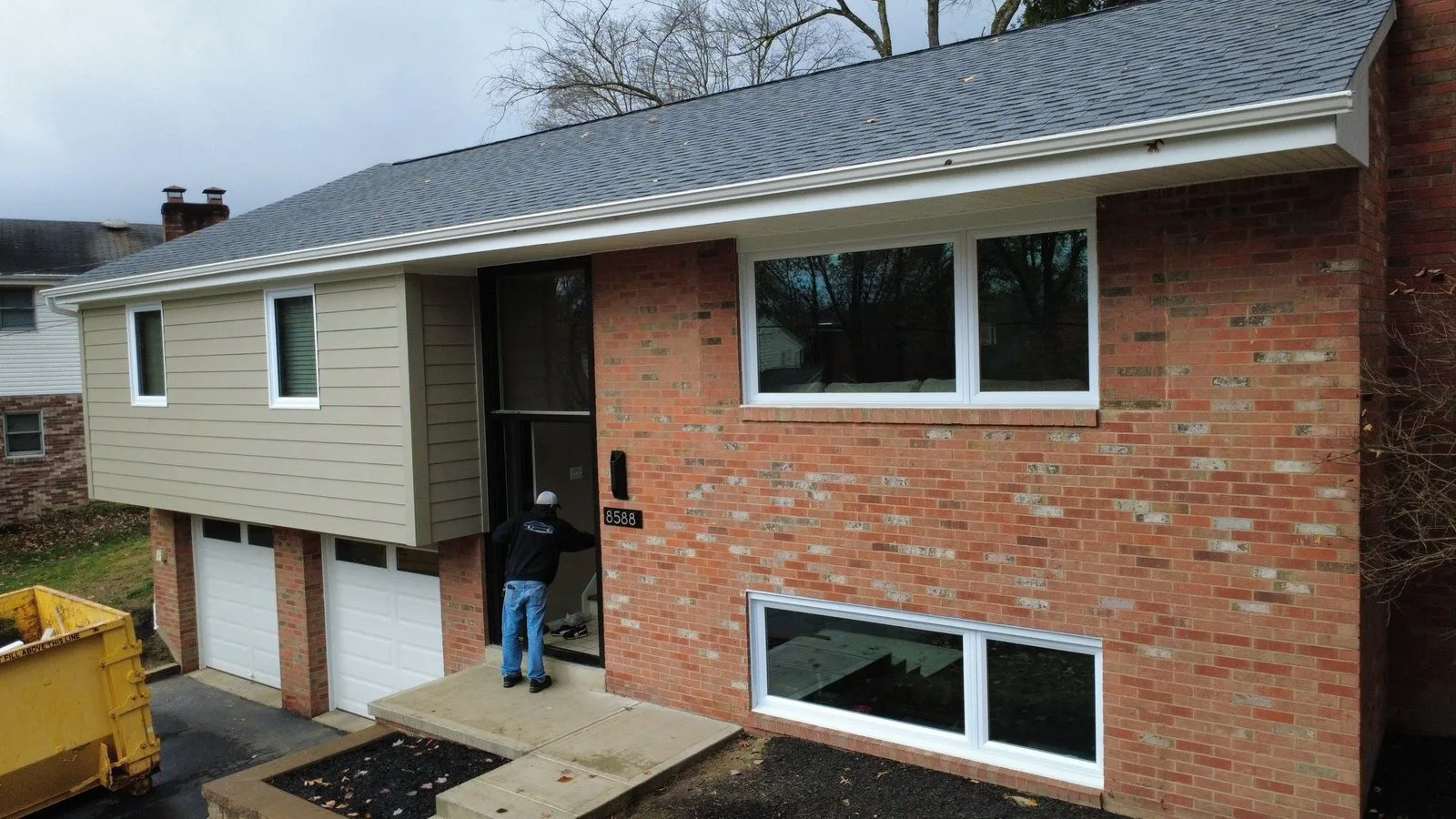
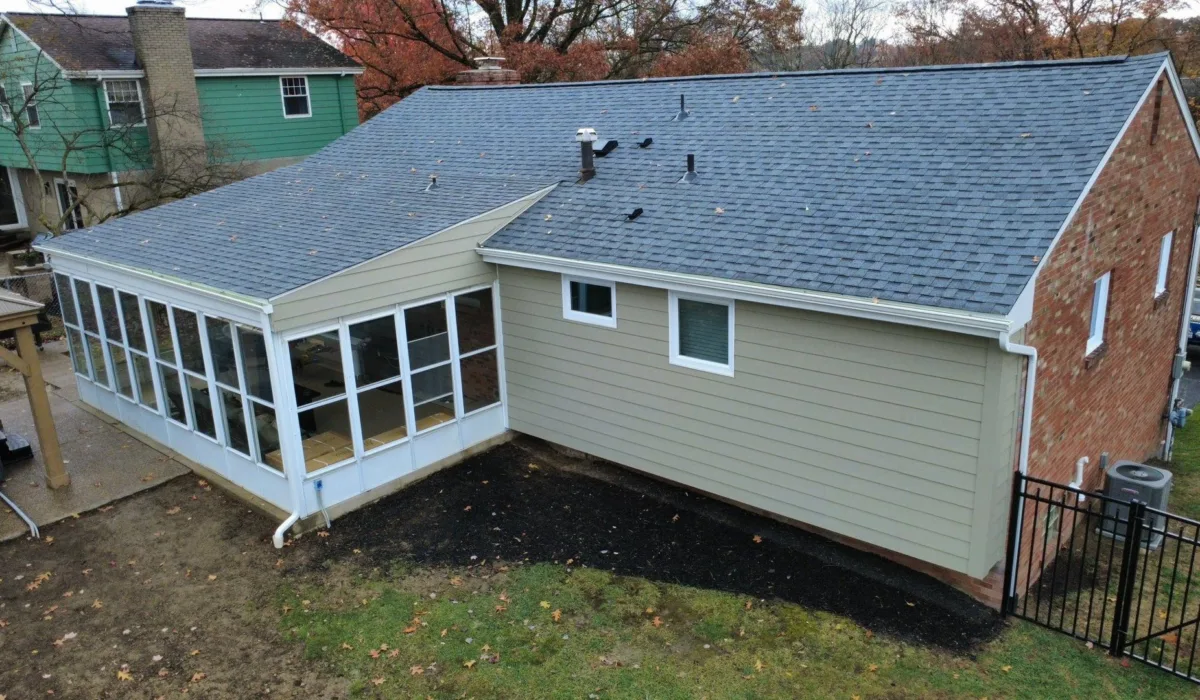
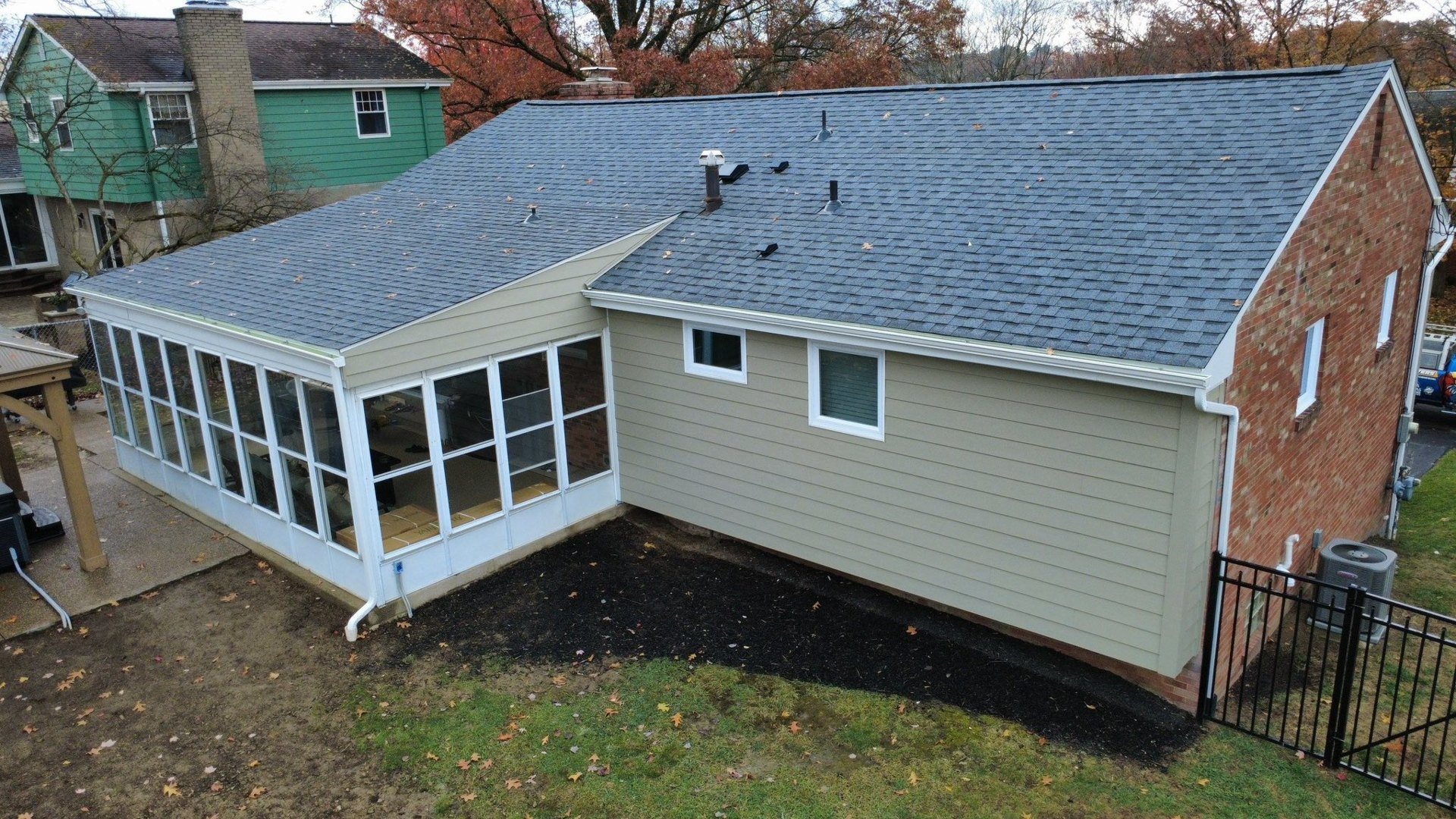
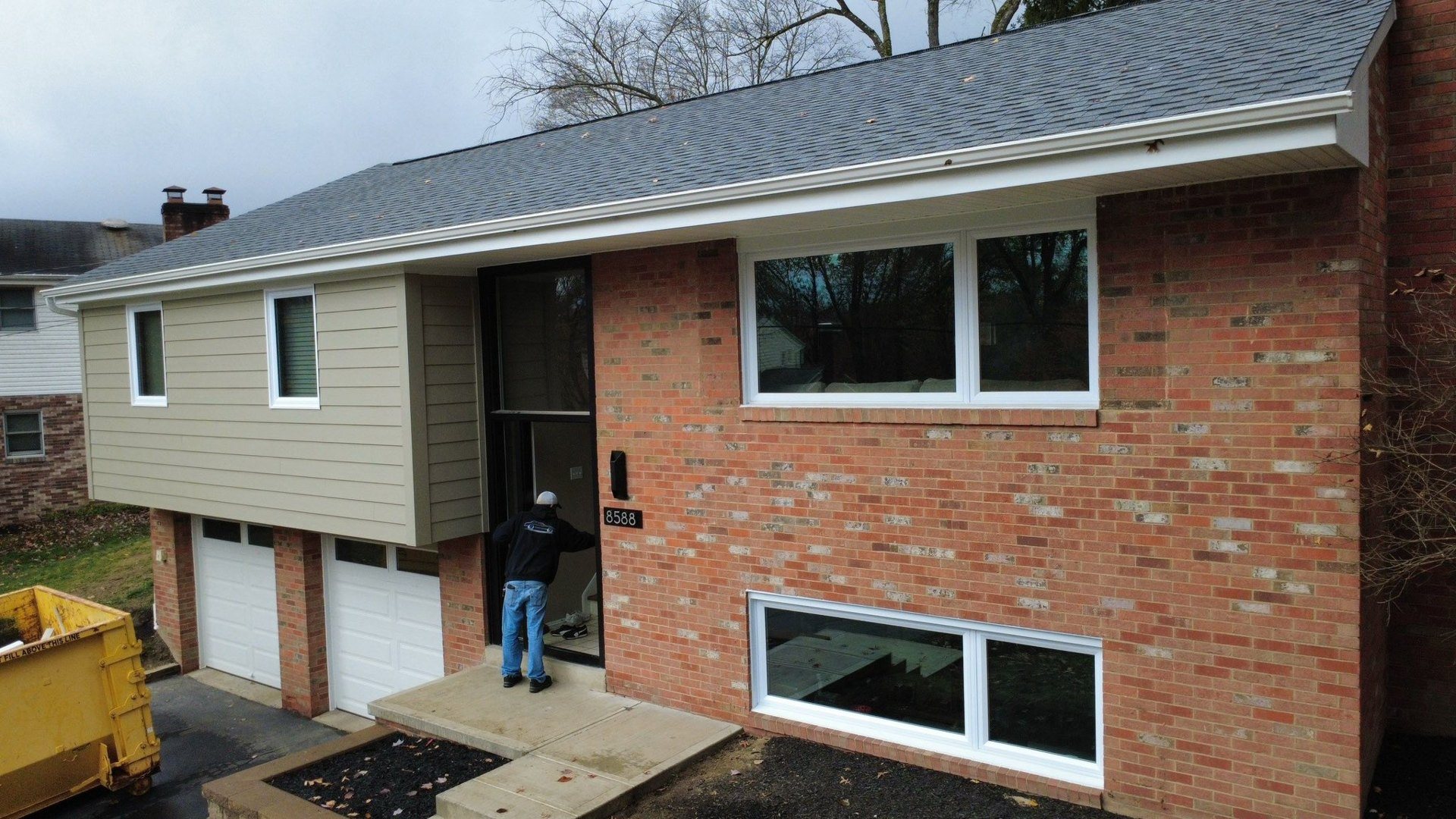
In plain terms: insulated vinyl is the better choice when the budget is the first constraint, when the house is a mid century ranch or split level where vinyl already fits the neighborhood, and when you want a quieter, warmer wall without a premium exterior. Fiber cement is the better choice when the house has architectural detail worth showing off, when fire resistance matters, when you want a painted look with crisp trim, or when you plan to stay 20 years or more and want the exterior to still look new. The Ross Township home in the photos went with James Hardie in Monterey Taupe for the deeper board profile and a lasting color.
Is Vinyl Siding Better With or Without Insulation?
If you have decided on vinyl, the insulated version is usually worth the upgrade on an older Pittsburgh house, for three reasons that have little to do with the R-value: it looks flatter on imperfect walls, it dents less, and it is quieter. Those are the benefits our customers mention after the job, not the energy number.
Hollow vinyl still makes sense on a rental, a garage, or a house with straight walls and a tight budget. A good panel such as Mastic Quest or Mastic Ovation, installed over housewrap, is a sound exterior.
Who installs it matters more than the choice between the two. Loose nailing, correct overlap, flashing at every window and roof to wall joint, and a good housewrap decide whether either product lasts. Ask any contractor for their Pennsylvania Home Improvement Contractor registration and check it on the PA Attorney General HIC lookup. Ours is PA174918.
What Drives the Cost of Insulated Siding?
Every house is different, so we do not quote prices here. These items move an insulated siding estimate up or down:
- Wall area and story count. A two story colonial in Franklin Park has far more square footage, and more ladder and scaffold time, than a ranch in Shaler.
- Corners, windows and doors. Every opening needs J channel, trim and flashing. A house with 25 windows takes much longer than one with 12.
- Tear off and what is underneath. Removing old aluminum or asbestos shingle siding, replacing rotted sheathing, and adding housewrap all add labor.
- Profile and brand. A premium insulated line with a thick foam backing and a wide color palette costs more than an entry level one.
- Soffit, fascia and gutters. Most full siding jobs also replace the soffit and fascia and often the gutters, since the trim is already off and the new siding should meet new trim.
We give a free written estimate that lists every one of these items separately, and we offer financing on exterior projects.
Who Should Choose Insulated Vinyl Siding?
- Owners of homes built before the 1980s with little wall insulation and wavy sheathing.
- Anyone on a busy road who wants a quieter house.
- Homeowners who want vinyl but are tired of dented or rippled panels.
- People planning to stay 10 years or more, so the comfort and durability pay back.
Who Should Skip It?
- Anyone whose main goal is a big cut in the heating bill. Attic insulation and air sealing usually come first.
- Owners of newer, well insulated homes where the extra R-value changes little.
- Anyone who wants a painted, high detail exterior. Fiber cement is the better fit.
- Budget projects, rentals and outbuildings where hollow vinyl does the job.
Frequently Asked Questions
Does insulated vinyl siding really make a difference?
It makes a clear difference in appearance, impact resistance and noise, and a modest difference in energy use. The foam adds roughly R-2 to R-4 to the outside of the wall and covers the studs. On an older uninsulated house that is meaningful. On a newer well insulated house the energy gain is small, but the flatter, stiffer panel is still an upgrade.
What are the main problems with insulated siding?
Cost, installation difficulty and moisture. The foam backed panels are harder to cut and fit, they need loose nailing so they can move with temperature, and they rely on proper housewrap and flashing underneath because the wall cannot dry as freely as it does behind hollow vinyl. Almost every failure we have seen traces back to the installer, not the product.
Is insulated vinyl siding worth it in Pittsburgh?
For most older homes in the North Hills and the city, yes, if you have already decided on vinyl. Our winters are cold, our summers are humid, and a lot of local housing was built with thin or no wall insulation. The stiffer panel also handles our freeze and thaw cycles better than hollow vinyl. If you want the longest lasting exterior, compare it against fiber cement first.
What is the best type of siding for a house in 2026?
There is no single best. James Hardie fiber cement is the strongest all around performer for durability, fire resistance and looks. Insulated vinyl is the best value for a low maintenance exterior with some added comfort. Hollow vinyl is the budget choice. Wood and engineered wood look great but need more upkeep in our wet climate.
How long does insulated vinyl siding last?
Expect 20 to 40 years depending on sun exposure, color and installation quality. Dark colors on south and west walls fade sooner. Manufacturer warranties on vinyl are usually lifetime limited and prorated, so read the fine print on fading and transferability before you buy.
Get a Straight Answer on Your Siding
We will look at your walls, tell you whether insulated vinyl, hollow vinyl or James Hardie fits your house and your budget, and put the whole scope in a free written estimate. Malick Brothers Exteriors is BBB A+ accredited and serves Pittsburgh and the North Hills from West View. Contact us to schedule a siding consultation.