A roofing checklist is the fastest way to tell a legitimate commercial roofing company from one that will cost you money later. Commercial roofs in Pittsburgh take a beating from freeze and thaw cycles, heavy spring rain, ponding water and rooftop HVAC trades, and the contractor you hire has to understand all of that before you sign. This guide combines our legitimacy checklist with a local hiring guide for building owners and property managers searching for commercial roofing contractors in Pittsburgh. We are Malick Brothers Exteriors, a family owned roofer based at 500 Perry Highway in West View, and we handle commercial roofing in Pittsburgh as a MuleHide certified installer of EPDM, two ply low slope systems and silicone coatings. Here is how we would vet a roofer if we were the ones hiring.
How to Evaluate Roofing Companies: The Checklist
Legitimate contractors leave a clear paper trail: verifiable insurance, a state registration, a physical shop and every promise in writing. Use this table on every bid you receive.
| Verification area | What to check | How to check it |
|---|---|---|
| Pennsylvania HIC registration | Active registration number on the estimate and the truck | Search the number at the PA Attorney General HIC lookup |
| Insurance | Current general liability and workers' compensation certificates | Ask for the certificate of insurance and call the agent listed on it |
| Physical address | A real shop or office in the Pittsburgh area, not a PO Box | Look it up on a map, drive past it, check it matches the BBB listing |
| Manufacturer certification | Certified installer for the membrane they are quoting | Ask for the certificate and check the manufacturer's contractor locator |
| Commercial references | Two or three local commercial jobs from the last 12 months with a similar roof type | Call them and ask about schedule, cleanup and leaks since |
| Online reputation | Google reviews, BBB rating and complaint history | Read the one and two star reviews and how the company responded |
| Written estimate | Named products, thicknesses, insulation, flashing details, timeline, payment schedule | If it only says "TPO" or "EPDM" with no manufacturer or thickness, ask for a revision |
| Warranties | Manufacturer material warranty plus a written workmanship warranty | Ask who registers the manufacturer warranty and get a sample copy |
How Do I Tell if a Pittsburgh Roofer Is Licensed and Insured?
Pennsylvania does not issue a statewide roofing license. What the state does require is registration under the Home Improvement Consumer Protection Act for contractors doing home improvement work above a modest yearly threshold. Registered contractors must give the Attorney General proof of insurance and identifying information, and their registration number must appear on contracts and advertising. Ours is PA174918. You can check any contractor's number at the Pennsylvania Attorney General HIC search by registration number, business name or city.
The registration covers residential home improvement, so a purely commercial roofer may not need it. That is exactly why the insurance step matters more on commercial work. Ask for a certificate of insurance that names your building as the certificate holder, then call the insurance agent on the certificate and confirm the general liability and workers' compensation policies are active. A roofer without workers' compensation coverage can leave you, the building owner, exposed if a worker is hurt on your roof.
How to Check if a Roofing Company Is Legit: Beyond the Paperwork
- Manufacturer certification for the system being quoted. Flat and low slope systems such as EPDM, TPO, modified bitumen and silicone coatings have installation details that differ from shingles. Manufacturers only extend their full system warranties through certified installers. We are MuleHide certified, which is why we can offer MuleHide warranties on .060 EPDM, two ply low slope and silicone coating systems.
- Experience with occupied buildings. Ask how they stage materials, protect entrances, control odor and noise, and coordinate around your deliveries and customers.
- Years in business and who owns it. Ask who the owner is and whether they will be reachable during the project. Our company was founded in 2022 by Ryan Malick, and he still answers for every job.
- BBB accreditation. Accreditation means the company agreed to BBB standards and responds to complaints. We have been BBB accredited with an A+ rating since 2022.
Red Flags for Roofing Contractors
Red flags usually show up early in the sales process. Knowing them saves you from having to recover later.
High pressure sales tactics
A contractor who insists you sign today or says a special price expires tomorrow is using pressure, not evidence.
Large upfront payment demands
Established contractors have supplier credit and do not need your money to buy materials. A modest deposit followed by progress payments tied to milestones is normal. Pennsylvania's home improvement law caps deposits at one third of the contract price on covered residential work, and that is a sensible ceiling on commercial work too. Anyone asking for half or more before a single material arrives is a walk away.
No physical address
Storm chasers move from region to region after severe weather and rarely have a shop you can visit. If the only address is a PO Box or a mail drop, keep looking.
Vague or verbal estimates
A legitimate commercial bid names the manufacturer and product, the membrane thickness, the insulation type and R value, the edge metal and flashing details, tear off or overlay, disposal, the safety plan and the warranty terms. A verbal number or a one line quote is not a bid.
Skipping diagnostics
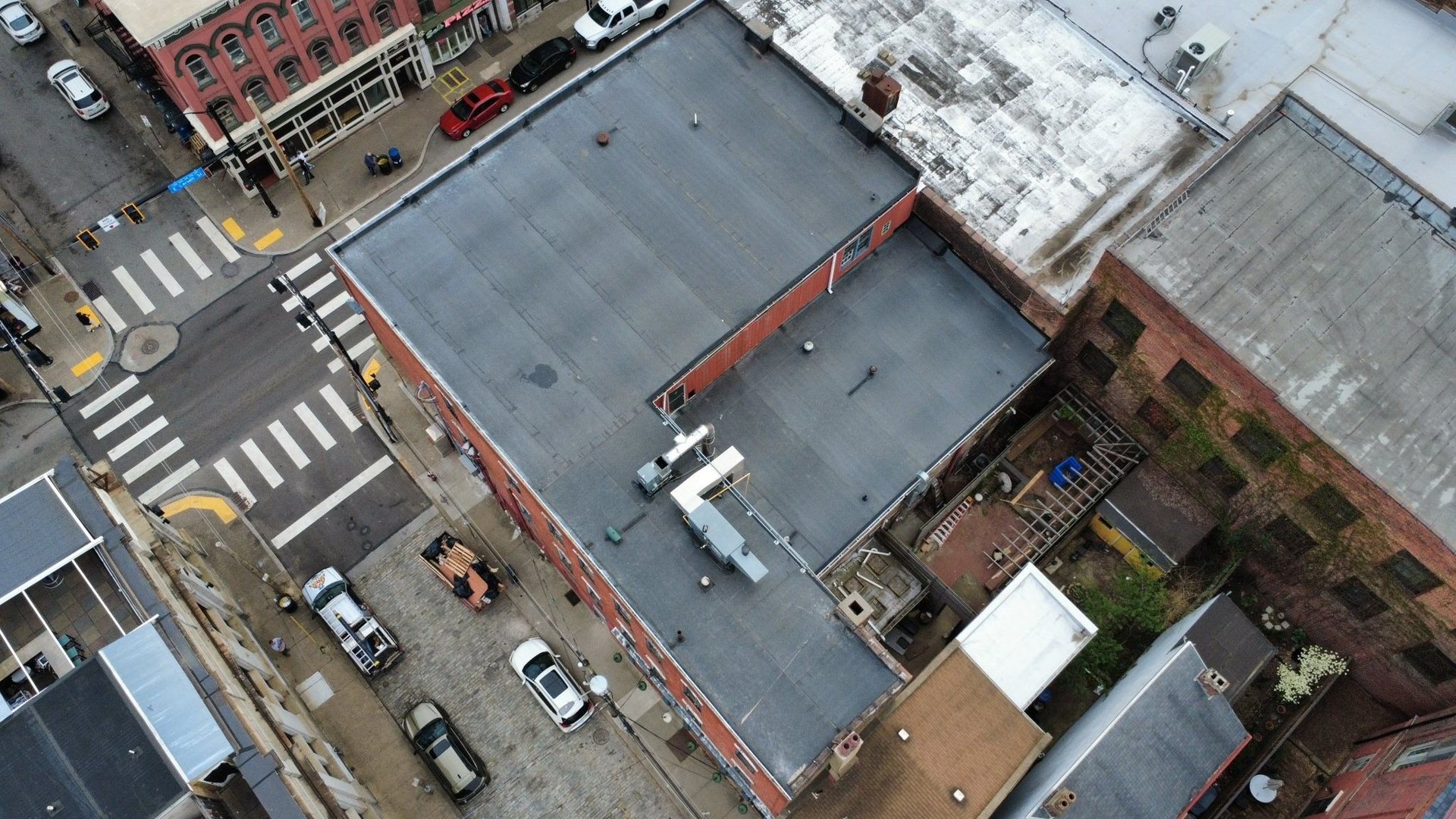
Be careful with any contractor who prescribes a full replacement without a moisture survey, core cut or at least a thorough walk of the roof and a look at the interior ceilings. Many leaks trace to penetrations, terminations or clogged drains and can be solved with a targeted roof repair rather than a new roof.
What Is the 10/50/50 Rule in Roofing?
The 10/50/50 rule is a commission structure used by some roofing sales organizations. Ten percent of a job's revenue is set aside for company overhead, then the remaining profit is split evenly between the salesperson and the company. It is a sales compensation model, not a building rule.
It matters to you because a salesperson paid this way has a direct incentive to sell a bigger job. Ask what would happen if you repaired instead of replaced, and get a second proposal. When we recommend a replacement, we show you the saturated insulation, the failed seams or the rotted decking that drove the call.
How to Identify Your Commercial Roof
Before you take bids, know what you have so you can catch the contractor who quotes the wrong system.
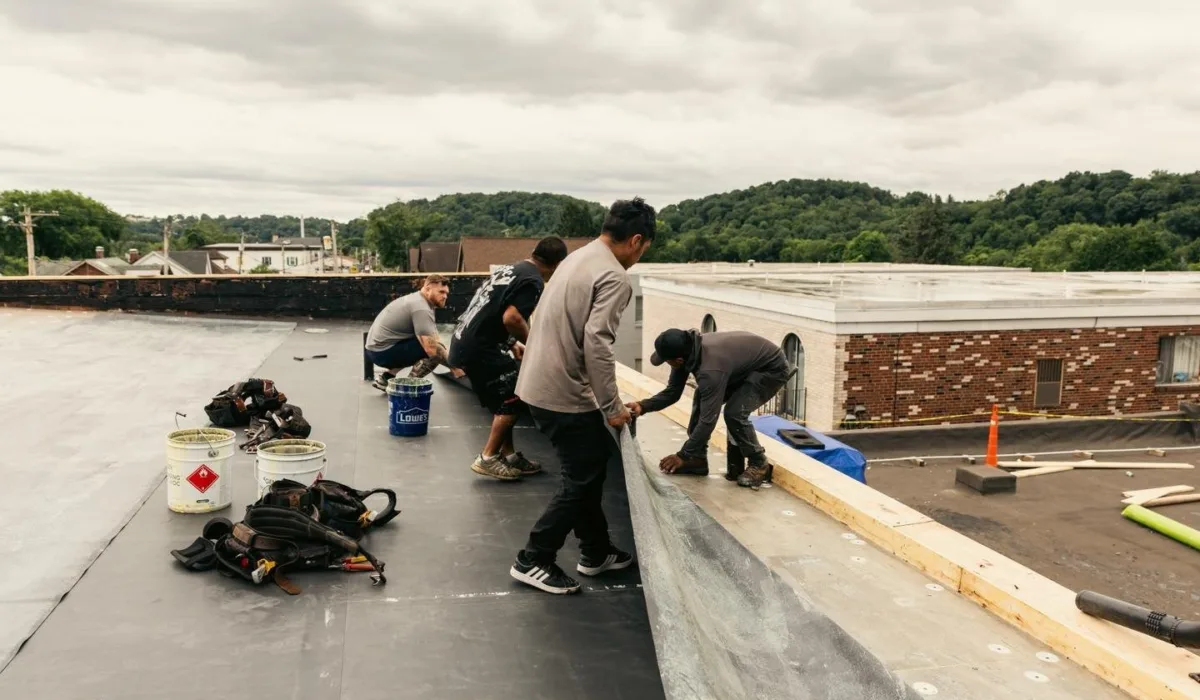
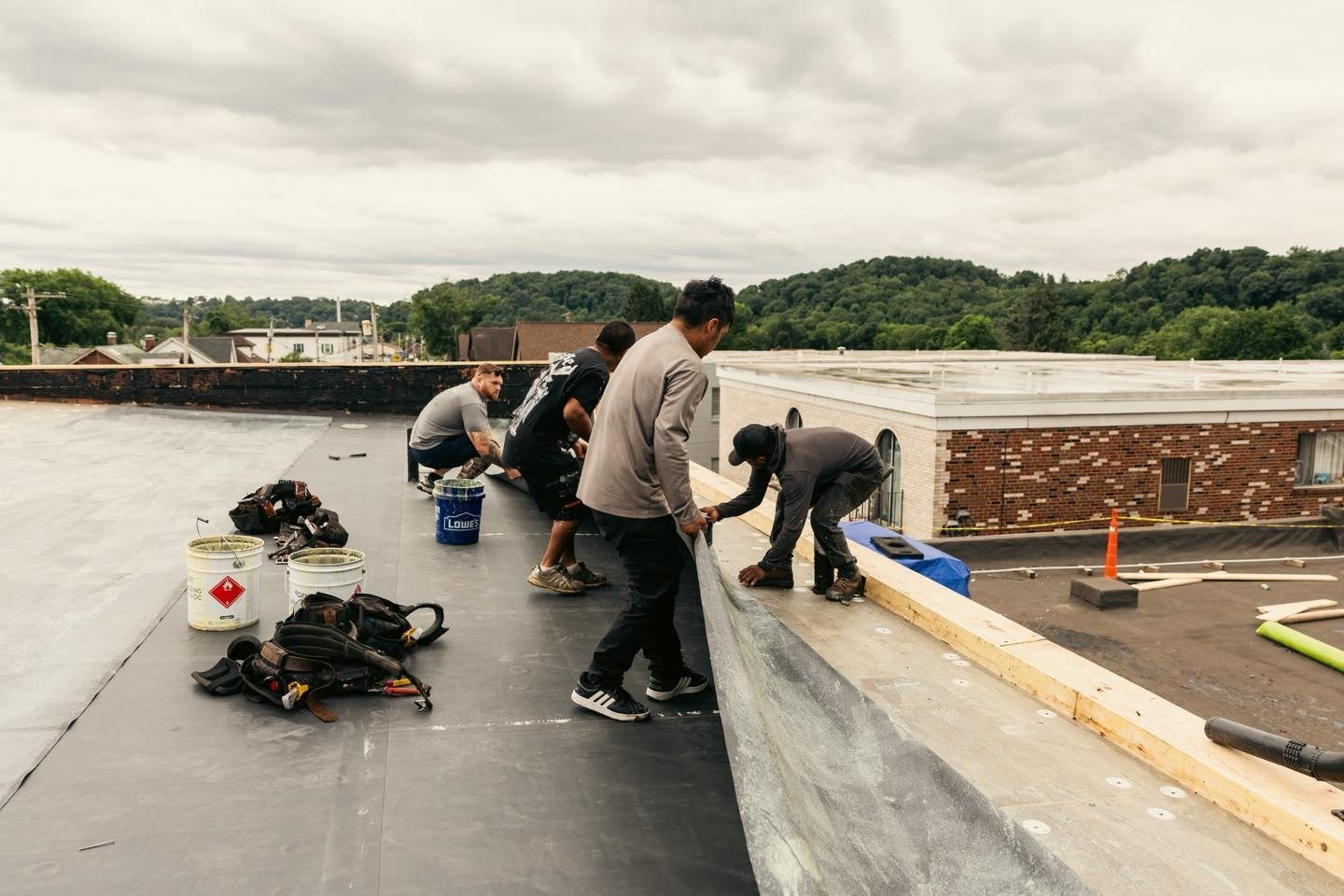
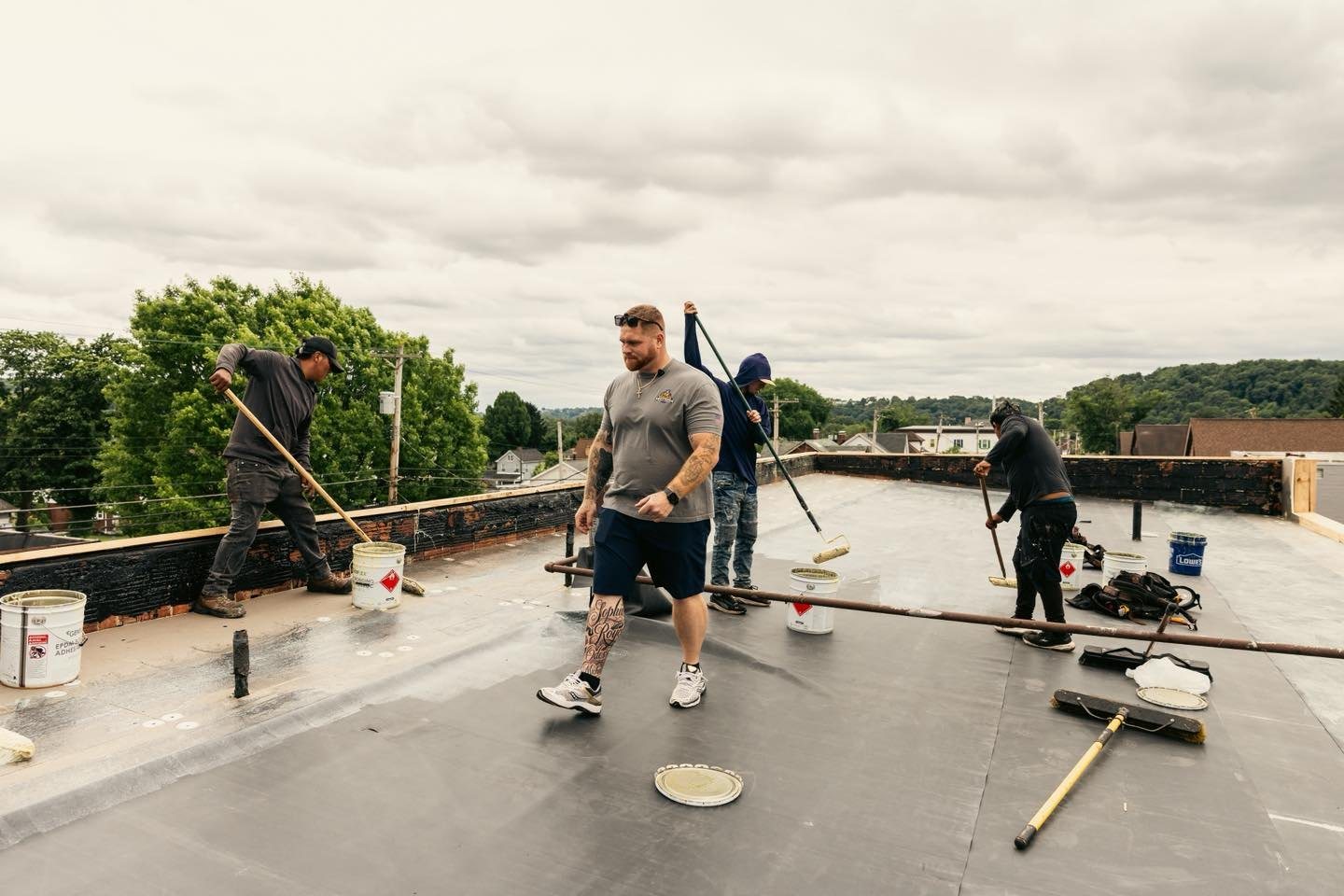
- EPDM: black rubber sheet, smooth, with seams every 10 or 20 feet. The most common flat roof on older Pittsburgh commercial buildings and apartment buildings. We install MuleHide .060 EPDM.
- TPO or PVC: white or light gray plastic sheet with heat welded seams. Common on newer retail and warehouse buildings.
- Modified bitumen: rolled asphalt sheets with a granular surface like a giant shingle, usually in two plies. Our MuleHide two ply low slope system is this type.
- Built up roof: layers of asphalt and felt topped with gravel. Found on many older city buildings.
- Silicone or acrylic coating: a white or gray liquid applied over an existing roof. Silicone holds up to ponding water, which is why we use it on flat roofs and box gutters.
- Metal: standing seam or exposed fastener panels on sloped commercial buildings, churches and garages. See our metal roofing page.
Our EPDM page explains how rubber roofs age and when a coating makes sense instead of replacement.
What Should a Commercial Roofing Bid Include?
Ask every bidder to use the same assumptions so the proposals are comparable: the same square footage, the same insulation R value, the same membrane thickness and the same warranty length. Then compare line by line.
- Substrate prep: what is being torn off, what is being repaired, and how wet insulation is handled.
- Insulation type, thickness and R value, and whether it is tapered for drainage.
- Membrane manufacturer, product name and thickness.
- Edge metal, flashing and termination details at walls, curbs, drains and pipes.
- Safety plan, daily start and stop times, staging area, and how tenants and customers get in and out.
- Payment schedule tied to milestones.
- Manufacturer warranty name and term, plus the workmanship warranty, and who registers each.
A bid that covers all eight points will often not be the lowest number. The lowest number usually leaves something out, and you will pay for it in change orders or in a roof that fails early. Compare lifecycle cost, not sticker price. If budget is the obstacle, ask about financing first.
How to Inspect a Commercial Roof Between Contractor Visits
Commercial roofs should be inspected twice a year, in spring and fall, and after any severe storm. You can do a basic walk yourself; leave the detailed assessment to a professional roof inspection.
- Look for ponding water that is still there 48 hours after rain. It points to a drainage problem and shortens membrane life.
- Check seams and flashing at every penetration: HVAC curbs, vents, pipes, skylights and parapet walls. Most leaks start here, not in the field of the roof.
- Look for cracks, blisters, punctures and open seams in the membrane.
- Keep drains, scuppers and gutters clear.
Finding Commercial Roofing Contractors in Pittsburgh
When you search for commercial roofing near you, Google shows a map pack first. Those listings are a starting point, not a vetting. Run every company on the map through the checklist above.
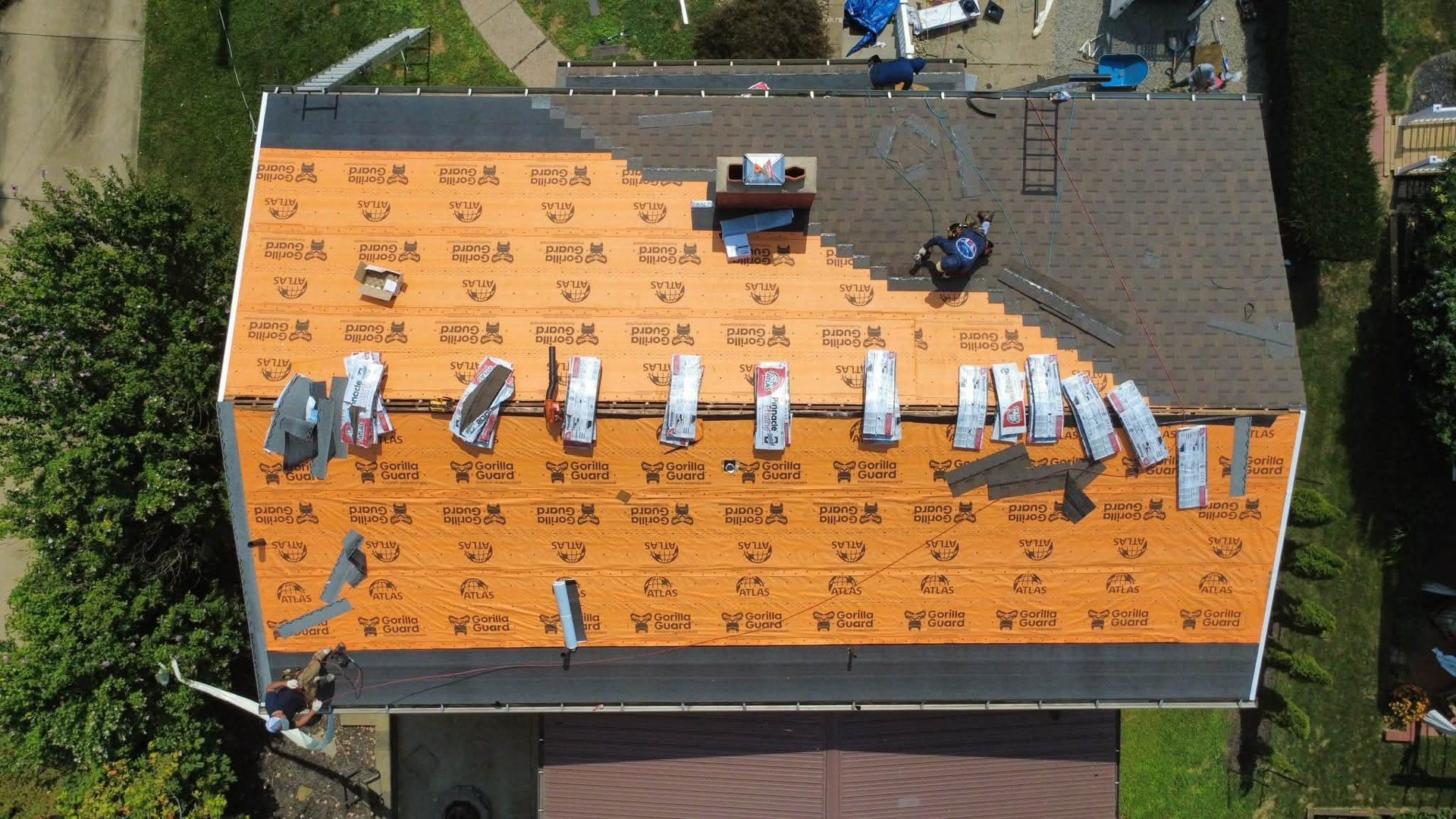
Our shop is at 500 Perry Highway in West View, in the North Hills. Our commercial work includes a MuleHide .060 EPDM roof on Pittsburgh Mirror and Glass, an EPDM system on a McKees Rocks apartment building, a commercial roof in Glenshaw, and low slope MuleHide two ply systems paired with Atlas shingle roofs on mixed buildings in Observatory Hill and Mt. Washington. We also run a dedicated repair division for flat, slate, tile and shingle roofs and box gutters. For the full list of towns we cover, see our service areas.
Protecting Yourself From Storm Chasers
Storm chasers follow severe weather into a region, knock on doors offering free inspections and quick repairs, then leave town before the work fails. Do not commit to anything with an unsolicited visitor on the spot. Ask for the HIC number and the local address, and check both. Contact your insurance carrier before authorizing storm related work, and never sign over an insurance claim or an assignment of benefits to a contractor you have not vetted.
Frequently Asked Questions
How can you tell a good roofer from a bad one?
A good roofer shows you the problem before quoting the fix, names the exact products in a written estimate, carries verifiable insurance and a PA HIC registration, has a local shop, offers both a manufacturer and a workmanship warranty, and gives you time to decide. A bad one pressures you, asks for a large deposit, and keeps the details vague.
What is the 25 percent rule for roofing?
The 25 percent rule comes from building codes in some states that require a whole roof section to be brought up to current code when more than a quarter of it is repaired or replaced within a 12 month period. Pennsylvania's statewide code does not apply that exact rule, but local permit offices around Pittsburgh have their own thresholds. Ask the contractor what the permit will require before you choose between repair and replacement.
How often should a commercial roof be inspected?
Twice a year, spring and fall, plus after any severe wind, hail or heavy snow. Keep a log with photos and dates, since manufacturer warranties expect documented inspections.
What are the most common commercial roofing problems?
Ponding water from poor drainage, open or failed seams, punctures from rooftop trades, flashing failures around HVAC curbs and penetrations, and saturated insulation that was never replaced during a previous overlay.
How many bids should I get for a commercial roof?
Two or three written bids from contractors who pass the checklist. Give every bidder the same assumptions on square footage, insulation and warranty term so the proposals compare line by line, and choose on total value and warranty, not the lowest number.
Get a Written Commercial Roofing Estimate
If you are vetting commercial roofers in Pittsburgh, start with us and hold us to every line of this checklist. We will walk your roof, show you what we find, and give you a free written estimate that names the products, the thicknesses, the warranty and the schedule. Contact Malick Brothers Exteriors or call 412-616-0191.