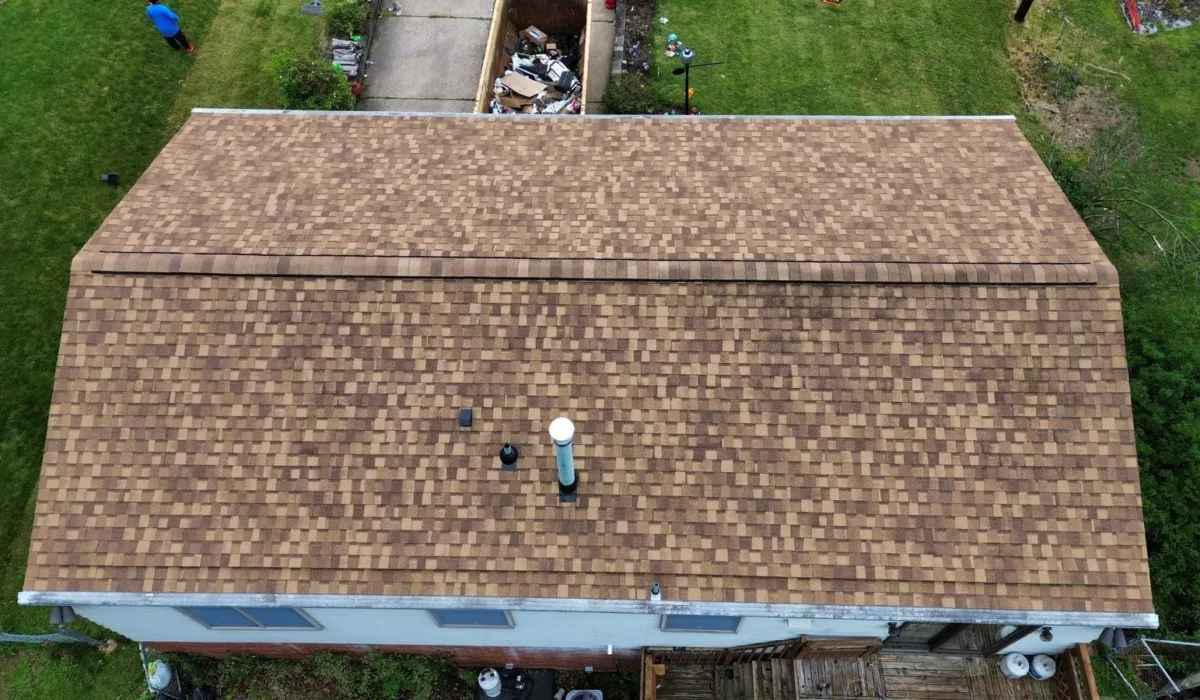
Black streaks on roof shingles are one of the most common questions we get from homeowners in the North Hills and across Pittsburgh. The streaks usually start near the top of a north facing slope, run downhill in long dark bands, and get wider every summer. They look like dirt, soot or mold. In almost every case they are none of those things. They are a living algae colony, and the good news is that algae on shingles is a cosmetic problem first and a roofing problem only when it is ignored for many years or when it is hiding real wear underneath.
This guide explains what causes black streaks on roof shingles, why Pittsburgh roofs get them so often, how to remove them without damaging the roof, what actually prevents them, and how to tell when the streaks are the least of your roof's problems. We install asphalt shingle roofing every week from our shop at 500 Perry Highway in West View, so this is written from what we see on ladders, not from a product catalog.
What causes black streaks on roof shingles
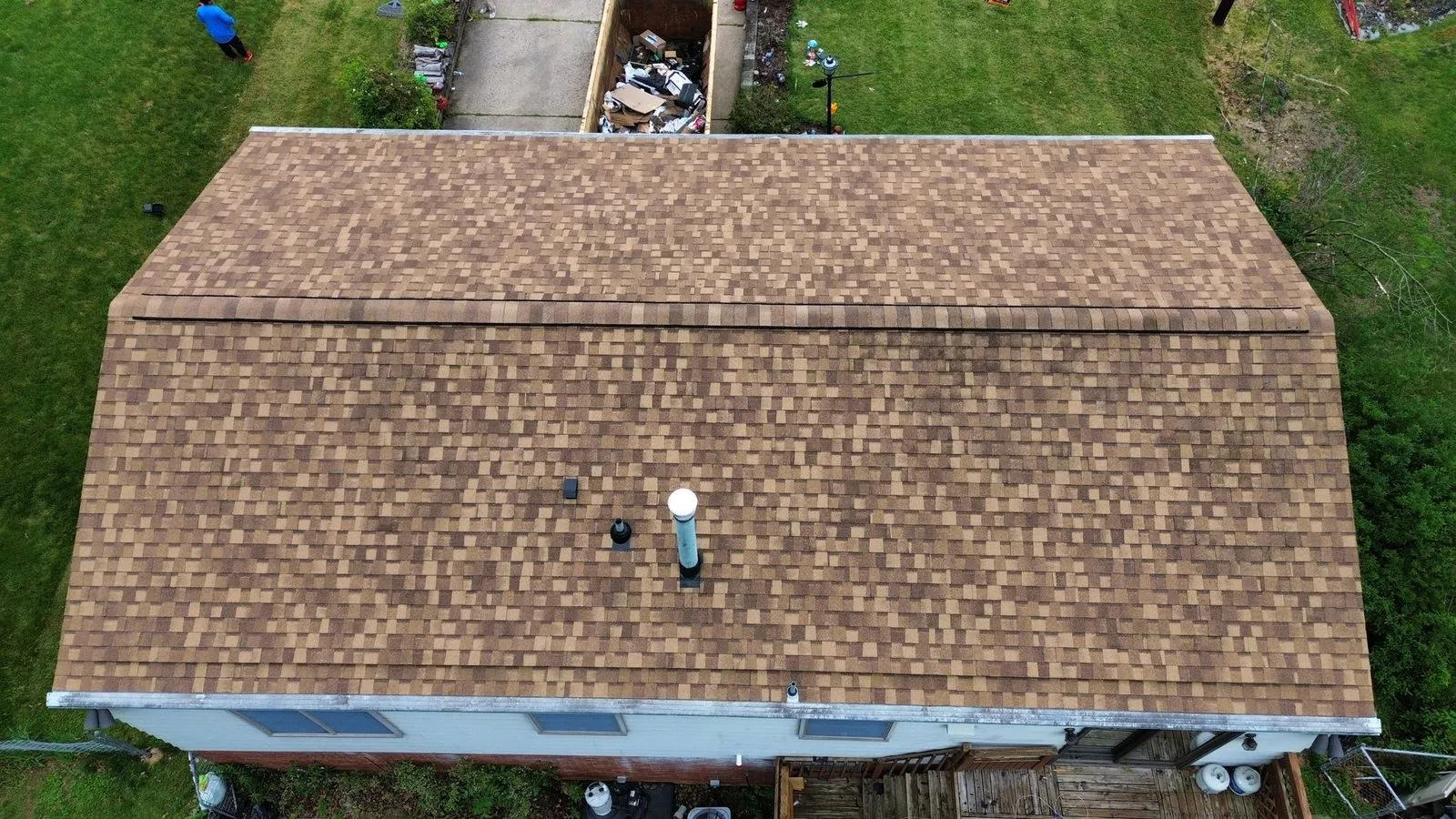
The dark streaks are caused by a blue green algae called Gloeocapsa magma. It is a cyanobacterium that travels through the air as microscopic spores. Wind, birds and squirrels carry the spores from one roof to the next, which is why you often see a whole street develop streaks within a few years of each other.
Once the spores land on a shingle that stays damp, they begin to grow. To protect itself from ultraviolet light, the algae produces a dark pigmented outer coating. That coating is the black color you see from the street. The colony spreads downward with rainwater, which is why the stains look like streaks instead of spots. On a roof that has been left alone for a decade, the colony can cover entire slopes.
Why modern shingles feed the algae
Older organic mat shingles rarely streaked. Today's fiberglass asphalt shingles use crushed limestone as a filler to add weight and fire resistance. Limestone is calcium carbonate, and Gloeocapsa magma feeds on it. That change in shingle chemistry is the main reason roof algae stains became so common from the 1990s onward.
Manufacturers responded by adding copper to the ceramic granules on the shingle surface. Rain washes a trace of copper down the roof and the algae cannot establish itself. Atlas shingles with Scotchgard Protector, which we install on most of our residential roofs, use this approach. Atlas describes it as long term protection against the black streaks caused by algae on its Scotchgard Protector page. If your roof was installed before algae resistant granules were common, or with a builder grade shingle that skipped them, you are more likely to see streaks.
Why Pittsburgh roofs streak more than most
Algae needs a food source, moisture and shade, and Western Pennsylvania supplies all three. Our summers are humid, we get rain in every month of the year, and mornings in the river valleys around the North Hills often start with heavy dew. Mature oaks and maples shade roofs in older neighborhoods like Ross Township, Bellevue, Shaler and Squirrel Hill, so those slopes stay wet until noon.
A north facing slope gets the least direct sun, dries slowest and streaks first. A slope under an overhanging tree behaves like a north slope even when it faces south. Here is how the common risk factors stack up on a Pittsburgh home.
| Risk factor | Impact | Why it matters here |
|---|---|---|
| North facing or shaded slope | High | Less sun means the shingles stay damp after rain and dew |
| Humid summers and year round rain | High | Pittsburgh supplies the moisture algae needs in every season |
| Overhanging trees | Medium to high | Shade plus leaf debris that holds water on the roof |
| Poor attic ventilation | Medium | A hot, humid attic keeps the shingle surface warmer and damper |
| Neighbors with streaked roofs | Medium | Spores travel easily from house to house on a tight street |
| Shingles without algae resistant granules | Medium | Nothing on the surface stops the colony from starting |
Are black streaks on a roof harmful?
For the first several years, no. Algae does not eat the asphalt and it does not cause leaks. It is a surface stain. That is why we tell homeowners not to panic when a door knocker says the streaks mean the roof is failing.
Over a long period, though, there are real effects. The dark coating absorbs more heat than a light shingle, which raises the roof surface temperature and the attic temperature in July and August. The colony holds moisture against the granules, and as it grows and dies back it can loosen granules faster than normal weathering would. Granules protect the asphalt from ultraviolet light, so a heavily streaked roof that is also 15 or 20 years old can lose protection sooner than a clean one. Streaks also hurt curb appeal. None of this is an emergency, but all of it is a reason to deal with the streaks rather than let them run for another decade.
How to get rid of black streaks on shingles
The safe method is a low pressure soft wash with a chlorine bleach solution. Here is the process a homeowner or a roof cleaning company should follow.
- Pick an overcast, calm day. Sun bakes the solution dry before it can work, and wind carries overspray onto siding and plants.
- Wet down shrubs, grass and flower beds below the roof edge, and cover anything delicate. Runoff from the roof will reach them.
- Mix roughly equal parts household chlorine bleach and water in a garden pump sprayer. Some people add a small amount of dish soap so the solution clings to the shingles.
- Apply from the ridge down, working on a dry roof so the solution does not run off immediately. Let it sit for 15 to 20 minutes. Do not let it dry on the shingles.
- Rinse with a garden hose at normal pressure, again from the top down, and rinse the plants below a second time.
The streaks may not vanish instantly. The bleach kills the algae, and rain washes it off over the following weeks. One treatment usually lasts a few years on a Pittsburgh roof.
Never pressure wash a shingle roof
A pressure washer strips the ceramic granules off the shingle and drives water up under the courses, and most shingle manufacturers treat pressure washing as damage that is not covered by the warranty. If a cleaning company shows up with a pressure washer and no soft wash equipment, send them home.
Should you do it yourself?
Walking a wet, bleach covered roof is dangerous, and many Pittsburgh roofs on hillside lots are steep. If you cannot do the job from a ladder at the eaves, hire a company that soft washes roofs for a living. Oxygen based roof cleaners are gentler on plants and work more slowly.
How to prevent black streaks from coming back
- Zinc or copper strips at the ridge. A strip of metal under the ridge cap sheds trace metal ions in every rain and keeps the slope below it clear, which is why you often see a clean band under a metal chimney flashing on a streaked roof.
- Trim back overhanging trees. More sun means a faster drying roof and fewer leaves holding water on the shingles.
- Keep gutters flowing. Clogged gutters back water up onto the bottom courses of shingles and keep them damp.
- Fix attic ventilation. Balanced intake at the soffit and exhaust at the ridge keeps the roof deck cooler and drier from underneath. We check this on every roof inspection because it affects shingle life far beyond algae.
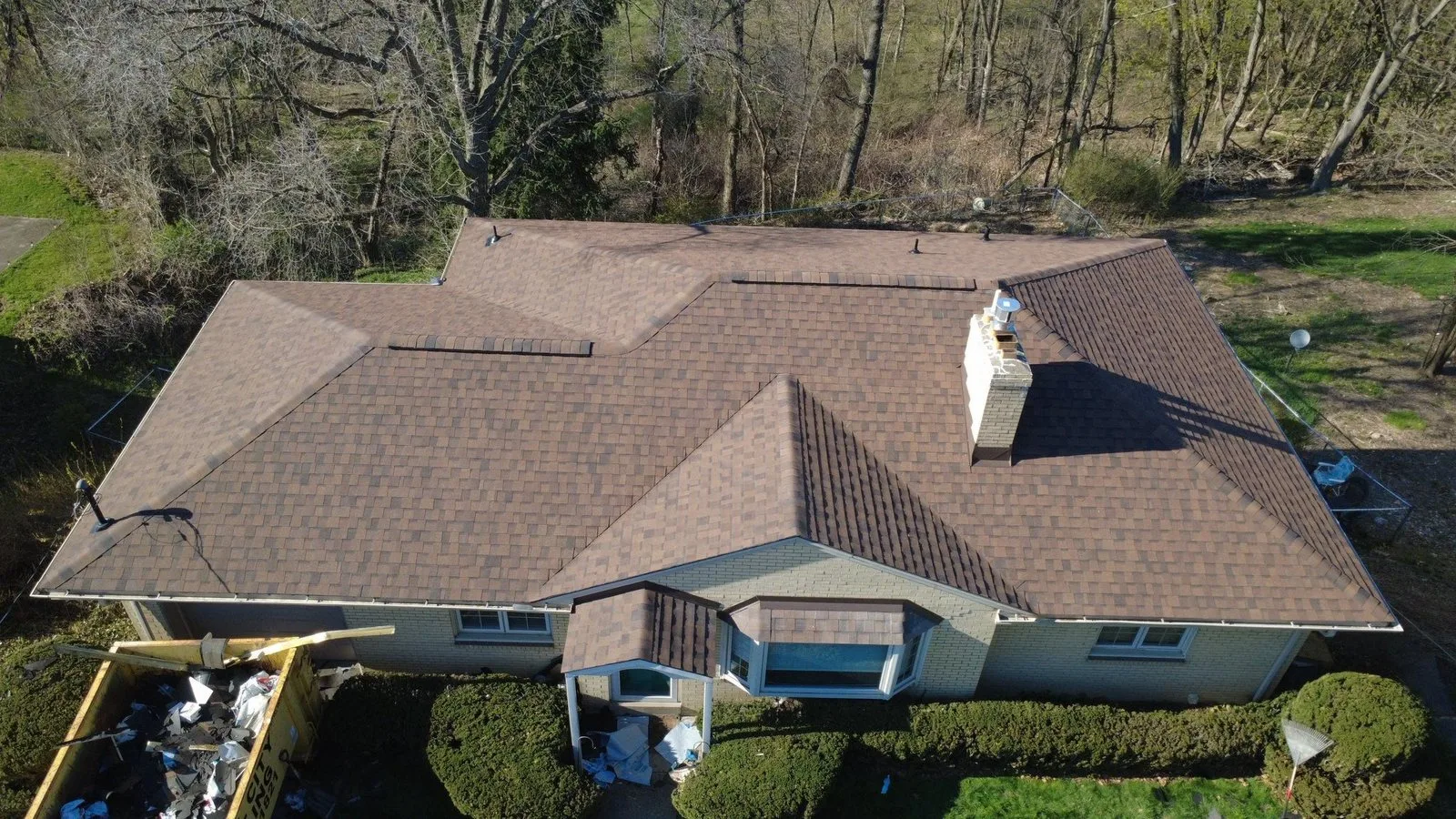
- Choose algae resistant shingles at replacement. This is the only permanent fix. Copper bearing granules cover the whole roof, not just a band below a strip, and they last the life of the shingle.
When replacement makes more sense than cleaning
Cleaning is the right call when the shingles are otherwise sound. It is the wrong call when the streaks are sitting on a roof that is already near the end of its life. Look for these signs before you spend money on a wash.
- Shingle edges curling up or cupping in the middle
- Bare, shiny asphalt where the granules have worn away, especially on the sunny slopes
- Granules piling up in the gutters and at the bottom of downspouts
- Cracked or missing shingles after wind events
- Any sign of a leak in the attic or on ceilings
- A roof that is 20 years old or more
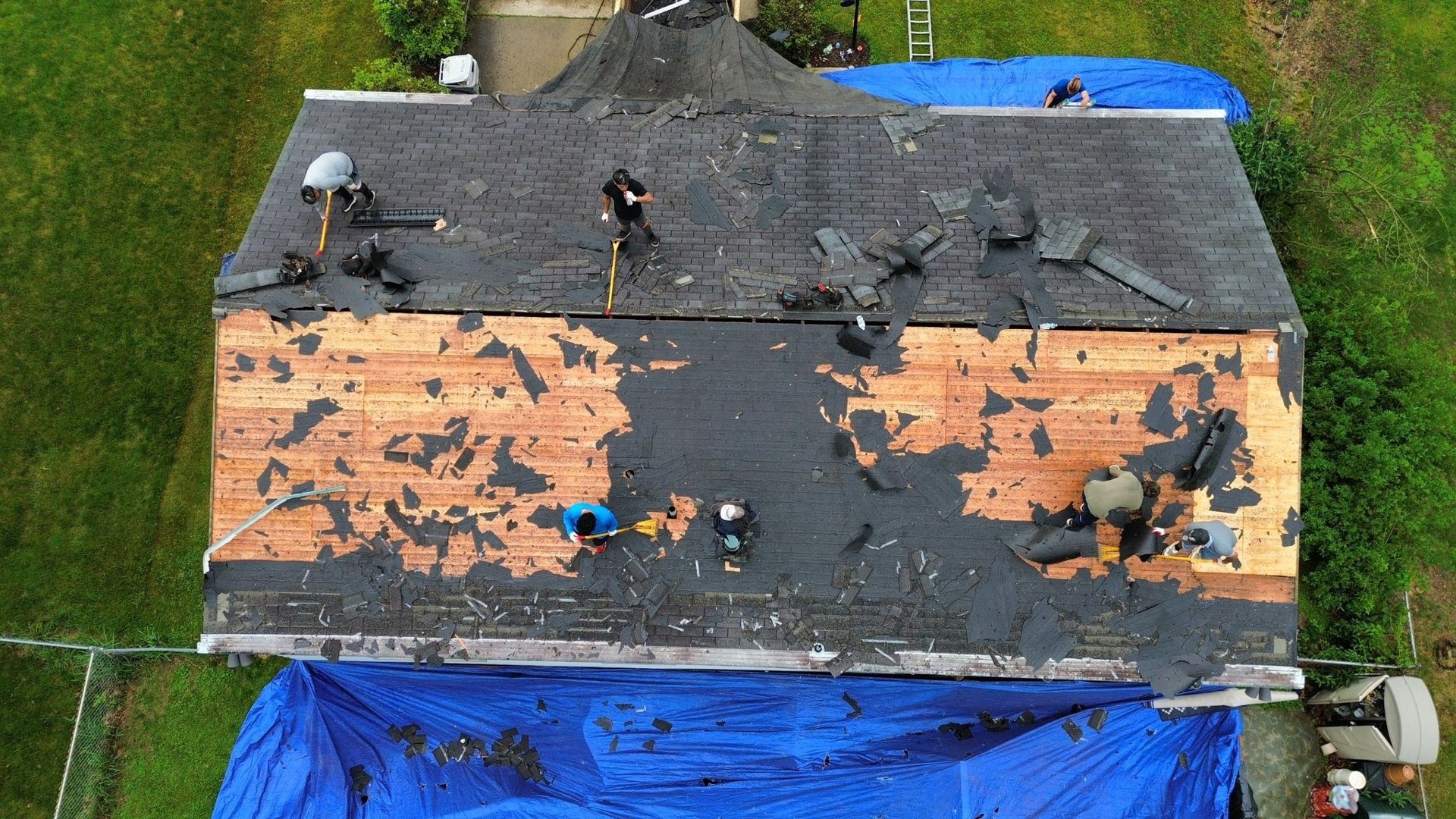
If two or more of those apply, the streaks are a symptom, not the problem. A full roof replacement with an algae resistant shingle solves the stains for good and resets the clock on everything else. If only one applies, a targeted roof repair plus a soft wash may be the better value. We give a free written estimate either way and we will tell you plainly which one we think you need.
What drives the cost of a replacement is the size and pitch of the roof, the number of layers to tear off, the condition of the decking underneath, the shingle line you choose and how much flashing and ventilation work is needed. We put all of that in writing before any work starts, and financing is available.
What we install to stop streaks for good
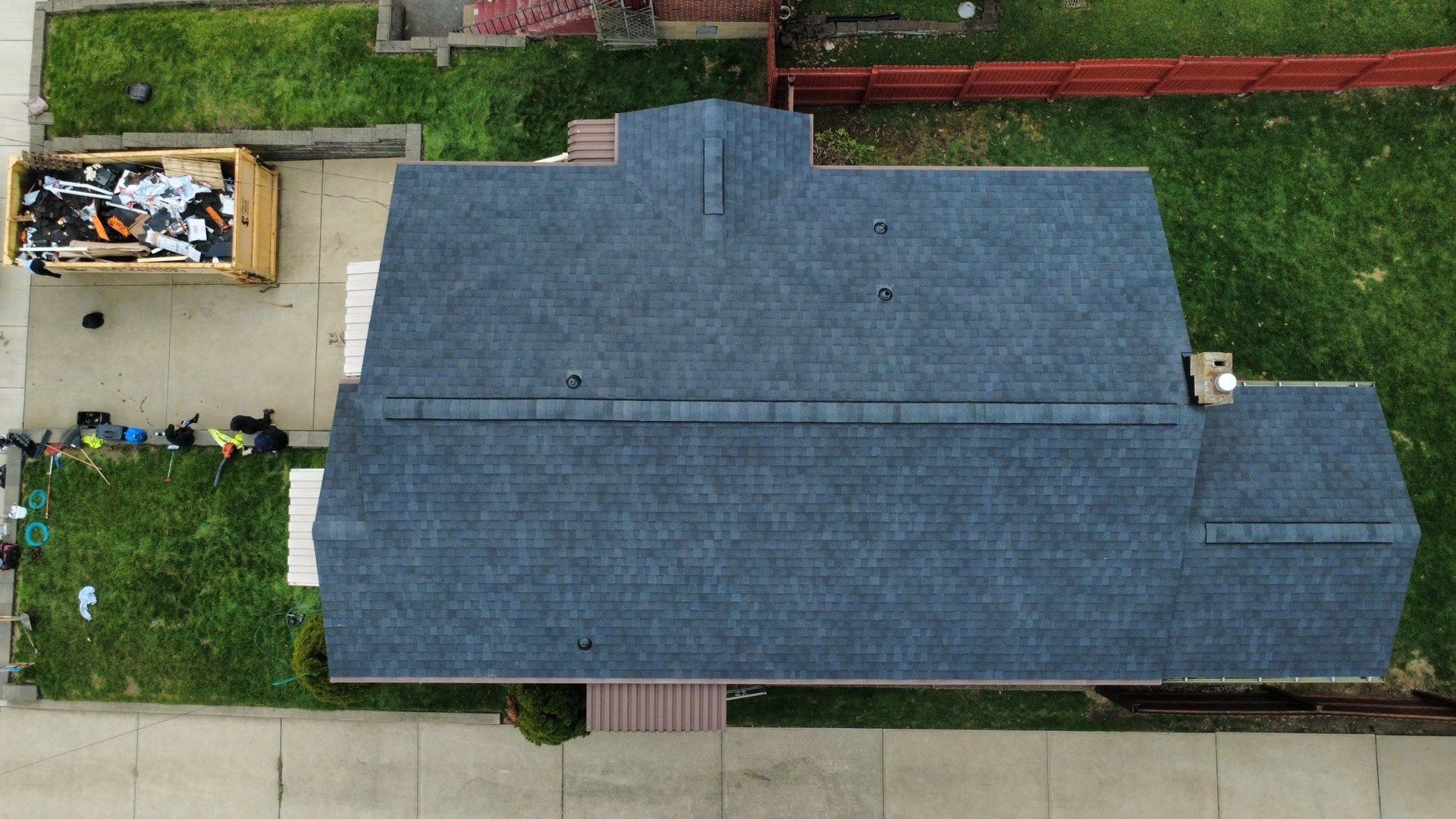
Malick Brothers Exteriors is a family owned roofing company founded in 2022 by Ryan Malick. We are an AtlasPro+ Platinum Select contractor, which lets us offer the Atlas 50 year warranty on a complete Atlas roof system of shingles, underlayment and ventilation. Every Atlas shingle line we install, including Pinnacle Pristine, StormMaster Shake and Signature Select, comes with Scotchgard Protector against black algae streaks. We are BBB A+ accredited and registered with the Pennsylvania Attorney General as Home Improvement Contractor PA174918, which you can verify through the PA Attorney General HIC lookup.
In the last year we have put algae resistant Atlas roofs on homes in Allison Park, Ross Township, Bellevue, Emsworth, Ben Avon, Squirrel Hill, Mars and across the North Hills.
Frequently asked questions
Why are my shingles turning black?
Shingles that are turning black in streaks or patches almost always have an algae colony called Gloeocapsa magma growing on them. The algae makes a dark coating to shield itself from sunlight. If the whole shingle looks black and shiny rather than streaked, that is granule loss exposing the asphalt underneath, which is a sign the roof is wearing out rather than growing algae.
Is it black mold on my roof shingles?
Usually not. Mold and mildew do grow on roofs, but the classic long dark streaks running down a slope are algae. True moss shows up as green, raised clumps and is more damaging because it lifts shingle edges. The bleach soft wash described above kills algae, mold and moss alike, so the treatment is the same even if the diagnosis differs.
What is a good homemade black streak remover?
Equal parts household chlorine bleach and water in a garden pump sprayer, with a squirt of dish soap to help it cling. Apply to a dry roof on a cloudy day, wait 15 to 20 minutes, then rinse with a hose at normal pressure. Protect plants below the roof before and after. Never use a pressure washer on shingles.
Do black streaks mean I need a new roof?
No. Streaks alone are cosmetic and a sound roof can be cleaned. You need a new roof when the streaks appear alongside curling, heavy granule loss, cracked shingles or leaks, or when the roof is 20 years old or more. A free inspection tells you which situation you are in.
Will algae resistant shingles stay clean forever?
The copper bearing granules keep working for the life of the shingle, and manufacturers back them with an algae resistance warranty. Heavy tree debris sitting on the roof can still hold moisture and grow moss on top of the shingles, so keep the roof and gutters clear even with an algae resistant product.
Get a straight answer about your roof
If your roof has black streaks and you are not sure whether it needs a wash, a repair or a replacement, we will come out, look at it, and tell you honestly. There is no charge for the visit or the written estimate, and nobody from our team will pressure you. Contact Malick Brothers Exteriors or call us at (412) 616-0191 to schedule a free roof inspection anywhere in Pittsburgh and the North Hills.