Table of Contents
Last spring, a property manager I’ll call Dave called us sounding genuinely rattled. Brown rings were spreading across the ceiling tiles in his warehouse office, and he was convinced the whole roof was about to cave in on his forklifts. We went out, walked the building inside and out, and found the real culprit in about forty minutes: one clogged drain holding a puddle the size of a kiddie pool. The roof was fine, and the fix was cheap. That visit is exactly why I want to walk you through what we look at, and why a careful inspection saves you from the worst-case story you’ve already written in your head.
What Happens During a Commercial Roof Inspection Starts Indoors
Most folks expect us to head straight up the ladder. We don’t. Before we touch the roof, we walk the building from the inside, checking ceilings, walls, and the spots where water tends to show up first. Active leaks, faint stains, soft drywall, and that telltale mildew smell all point us toward where moisture is sneaking in. Tracking those clues indoors helps us trace a leak back to its true source up top, which is rarely sitting directly above the stain. Skipping this step is how a contractor ends up patching the wrong spot and calling it a day.
What Does a Roof Inspection Include?
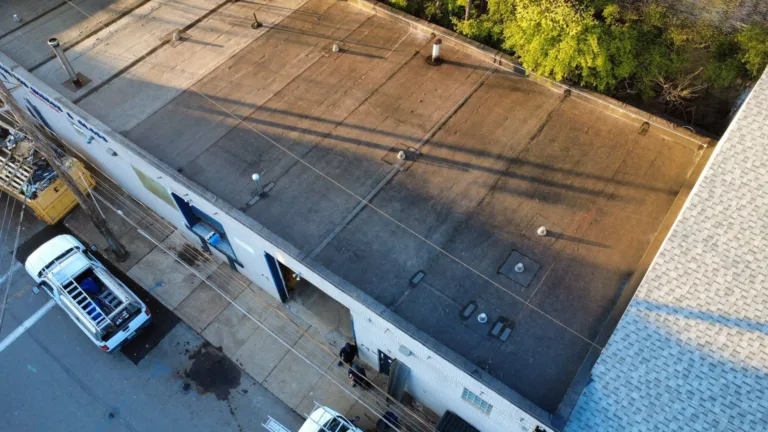
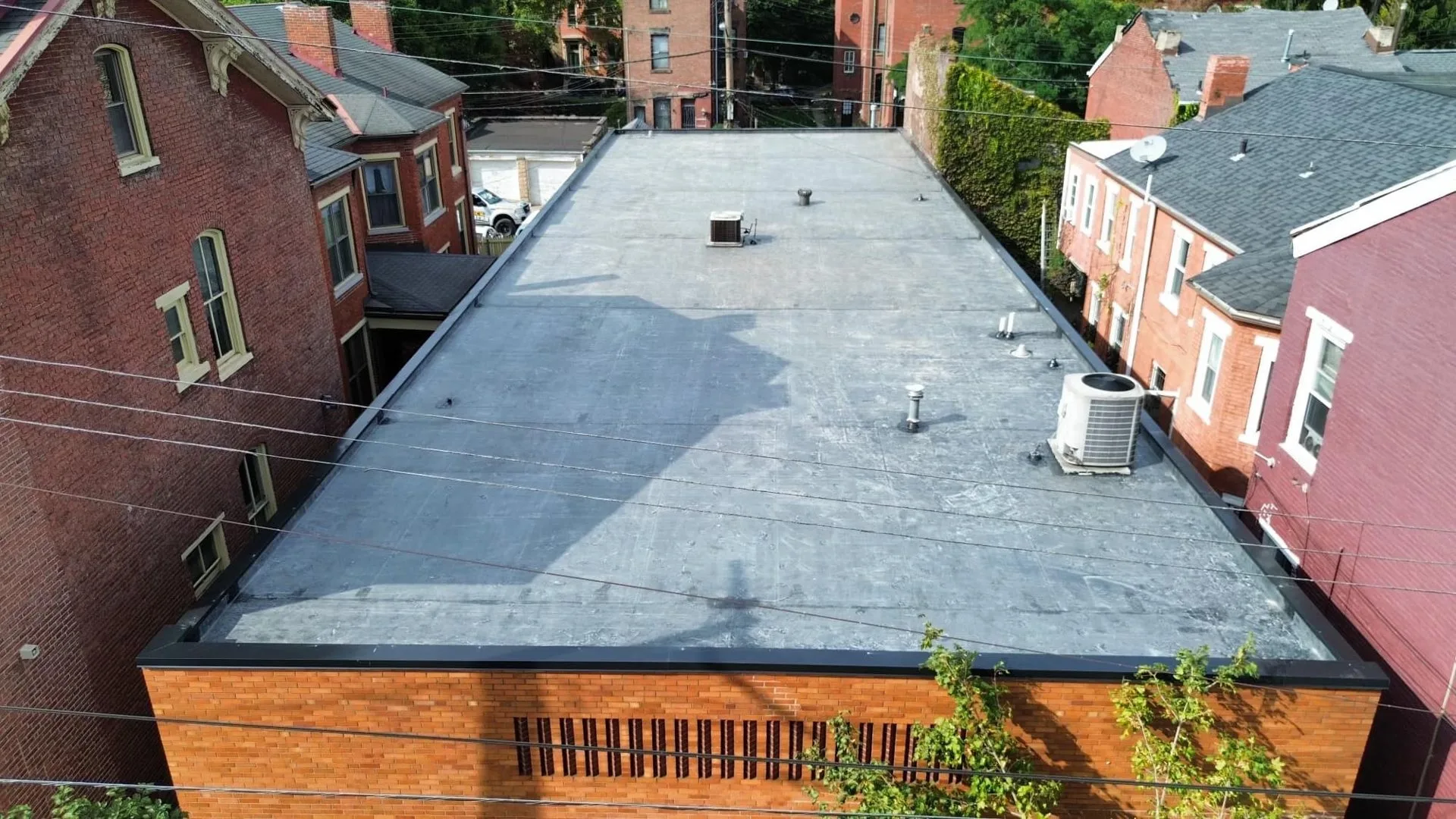
A real commercial roof inspection covers far more than a quick glance and a thumbs-up. We document the membrane, the seams, every penetration, the drainage system, and the structural edges, then back all of it with photos. The goal is one honest picture of the roof’s current health and how much life it has left. We also flag anything that could threaten your manufacturer warranty, because a single missed maintenance item can quietly void coverage you paid good money for. Think of it as a physical for your building, not a sales pitch in disguise.
What Happens During a Commercial Roof Inspection on the Roof Itself
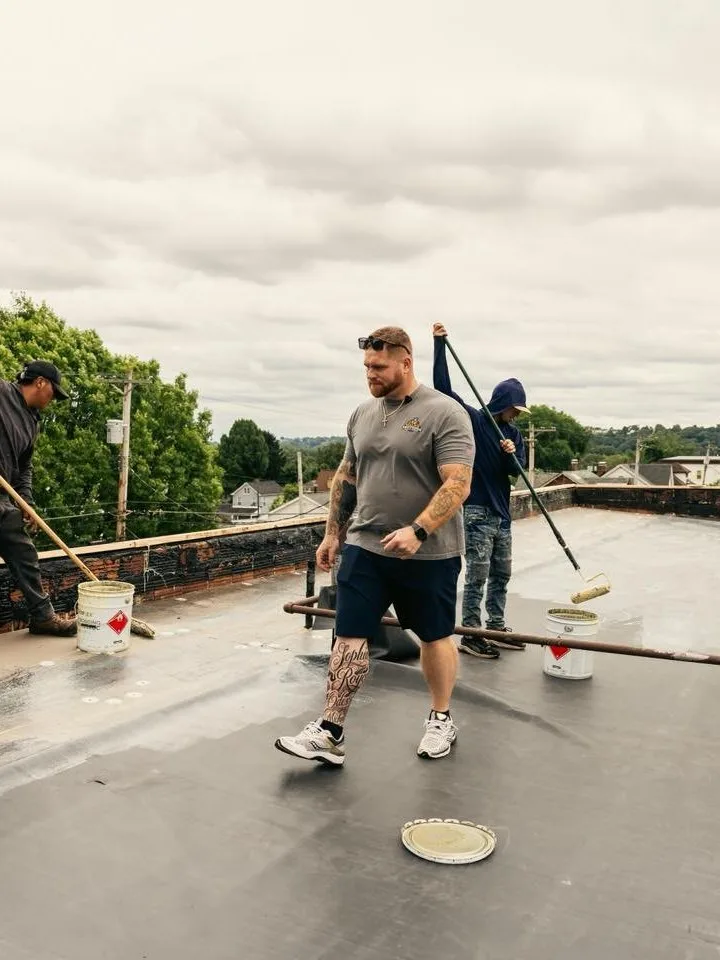
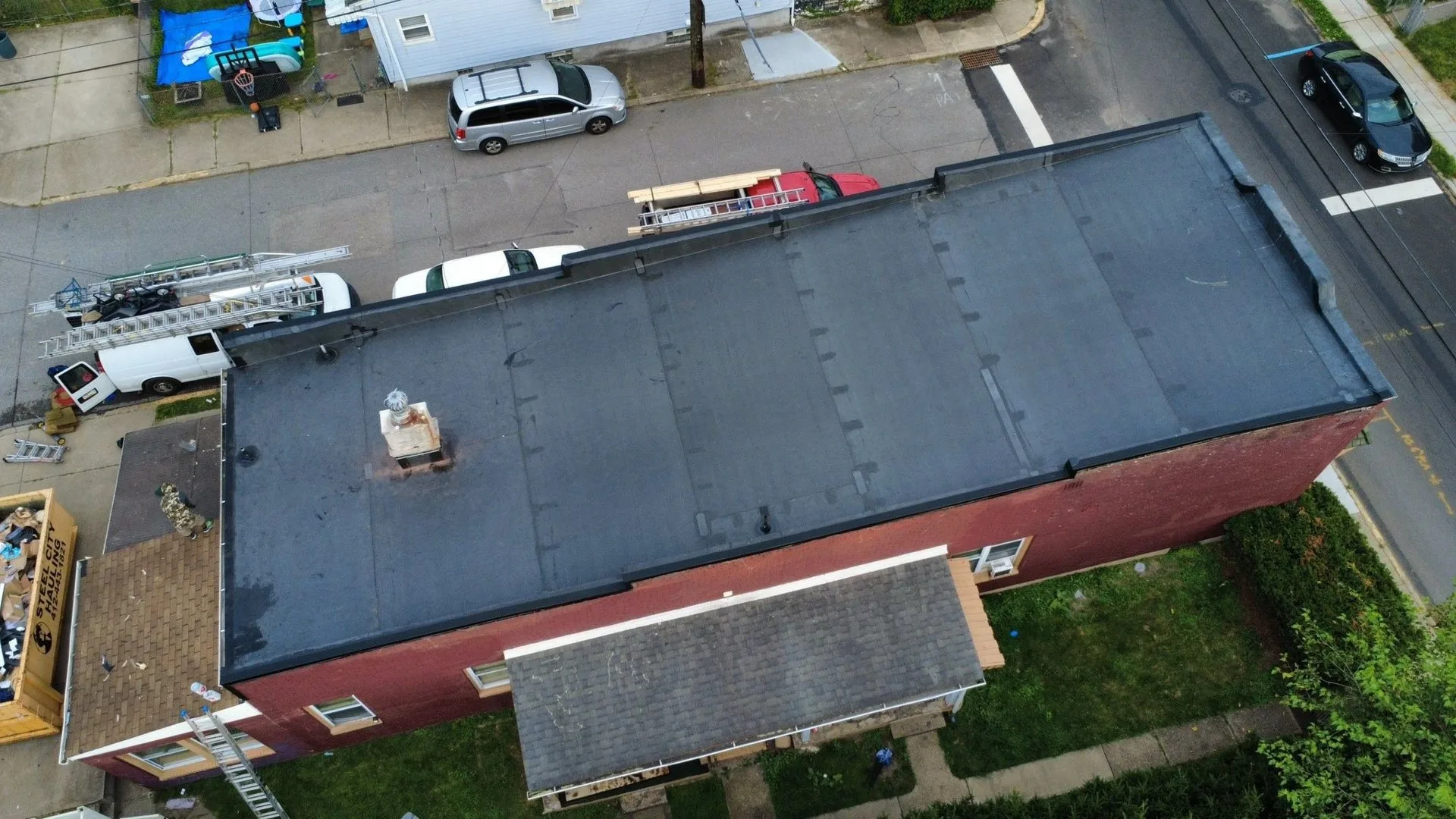
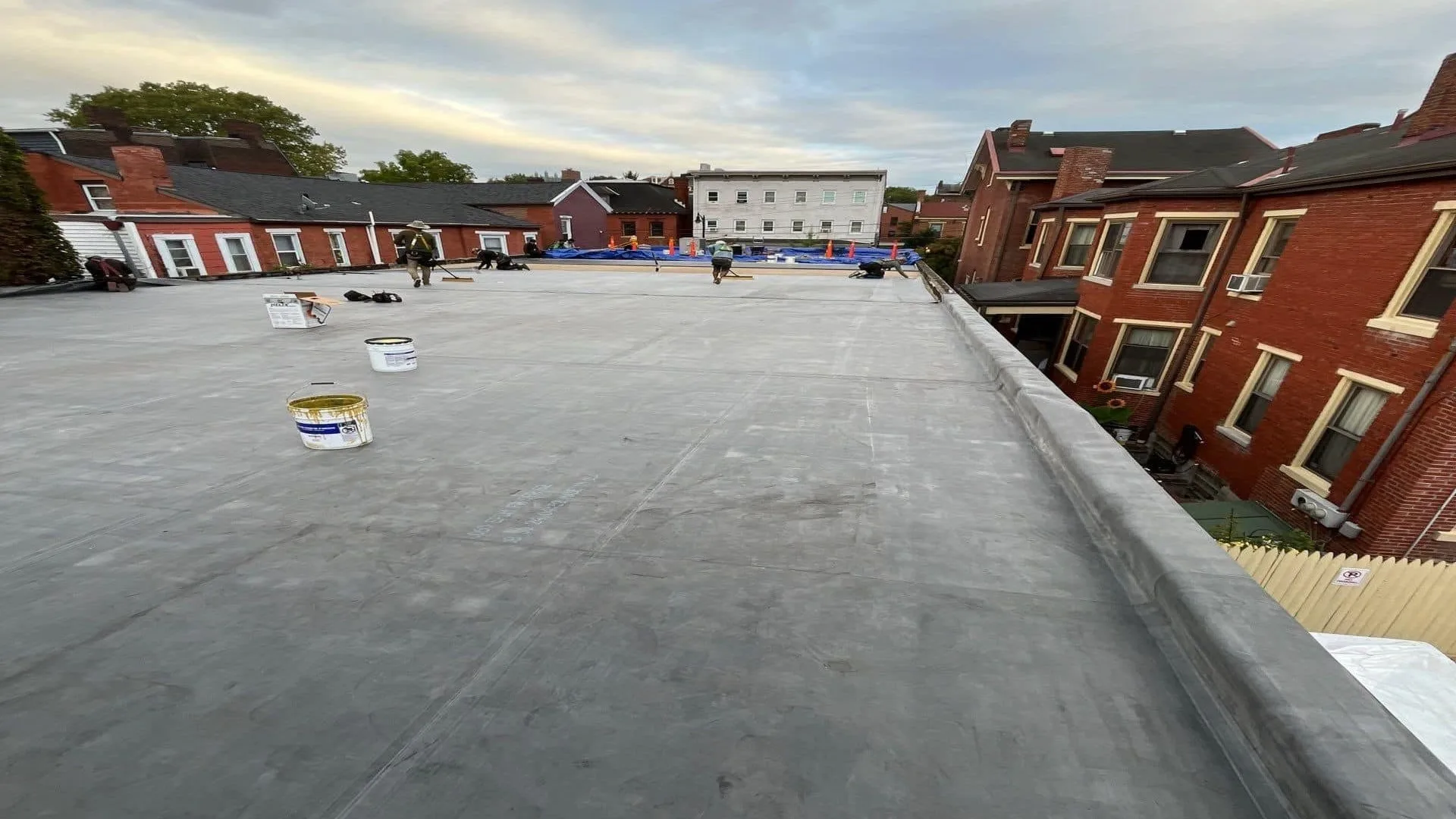
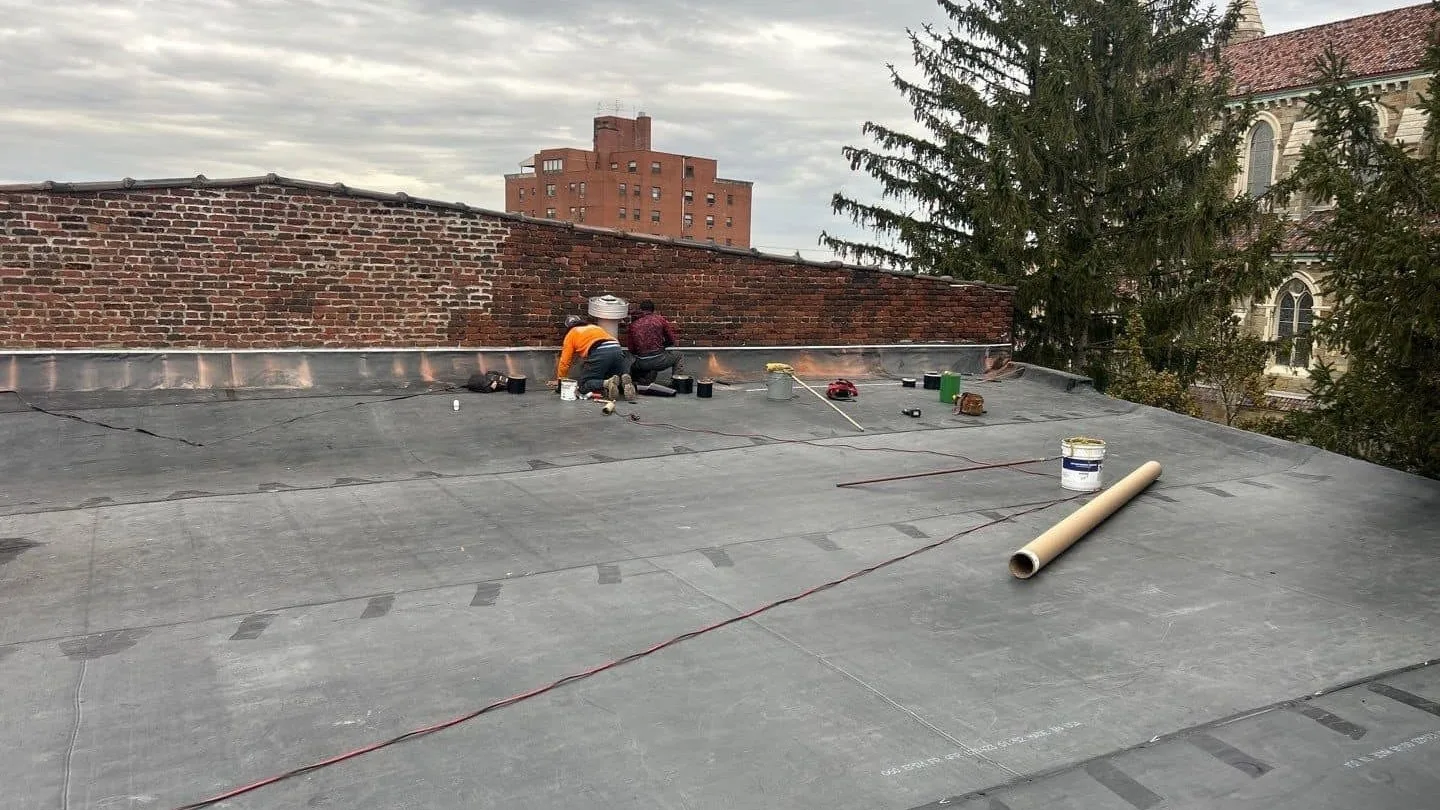
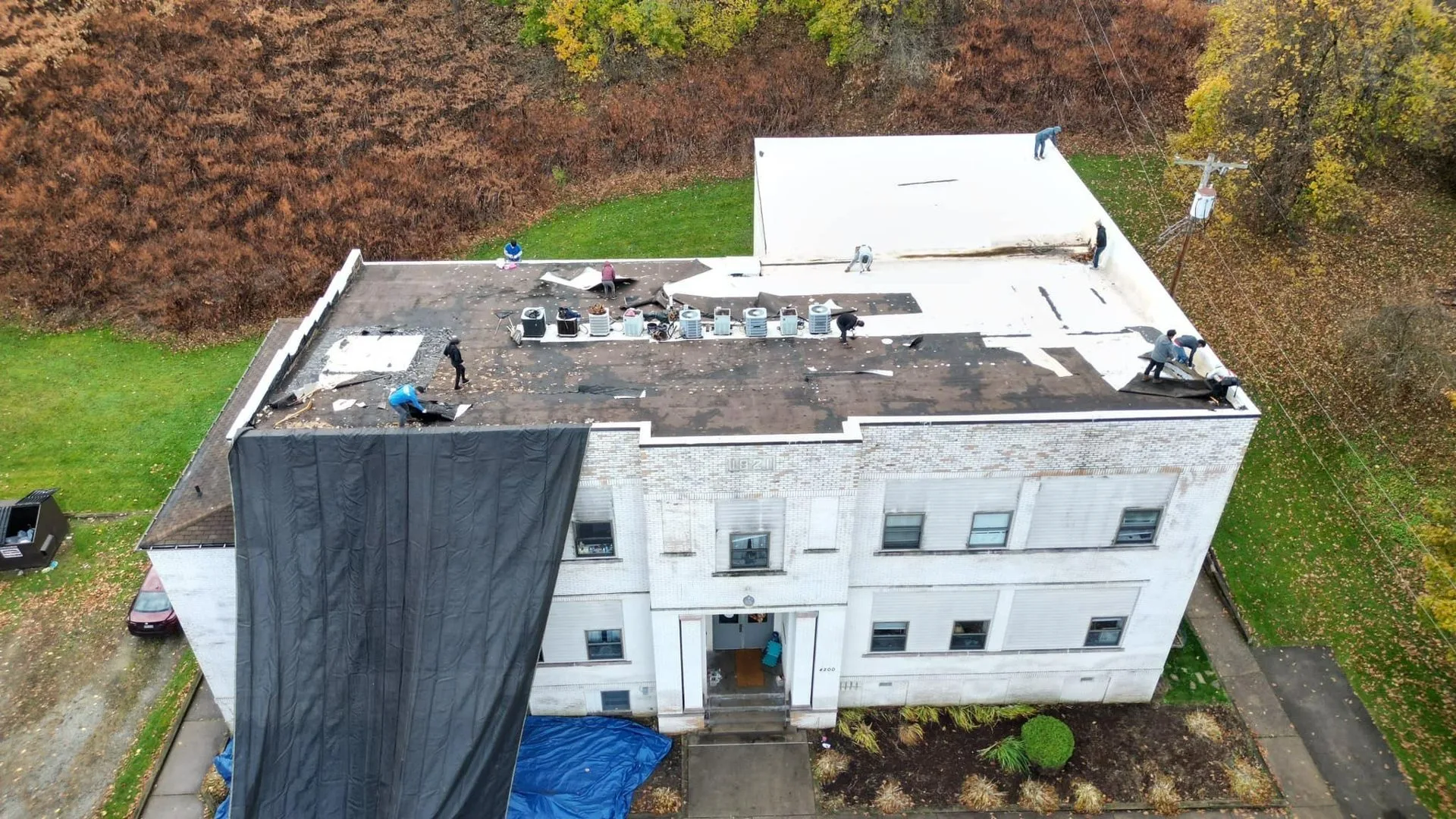
Once we’re up top, we work methodically from the perimeter toward the center so nothing slips by. This is the heart of any commercial roof inspection, and it is slow, deliberate, hands-on work. Here is what we are studying with every step.
Membrane and Surface
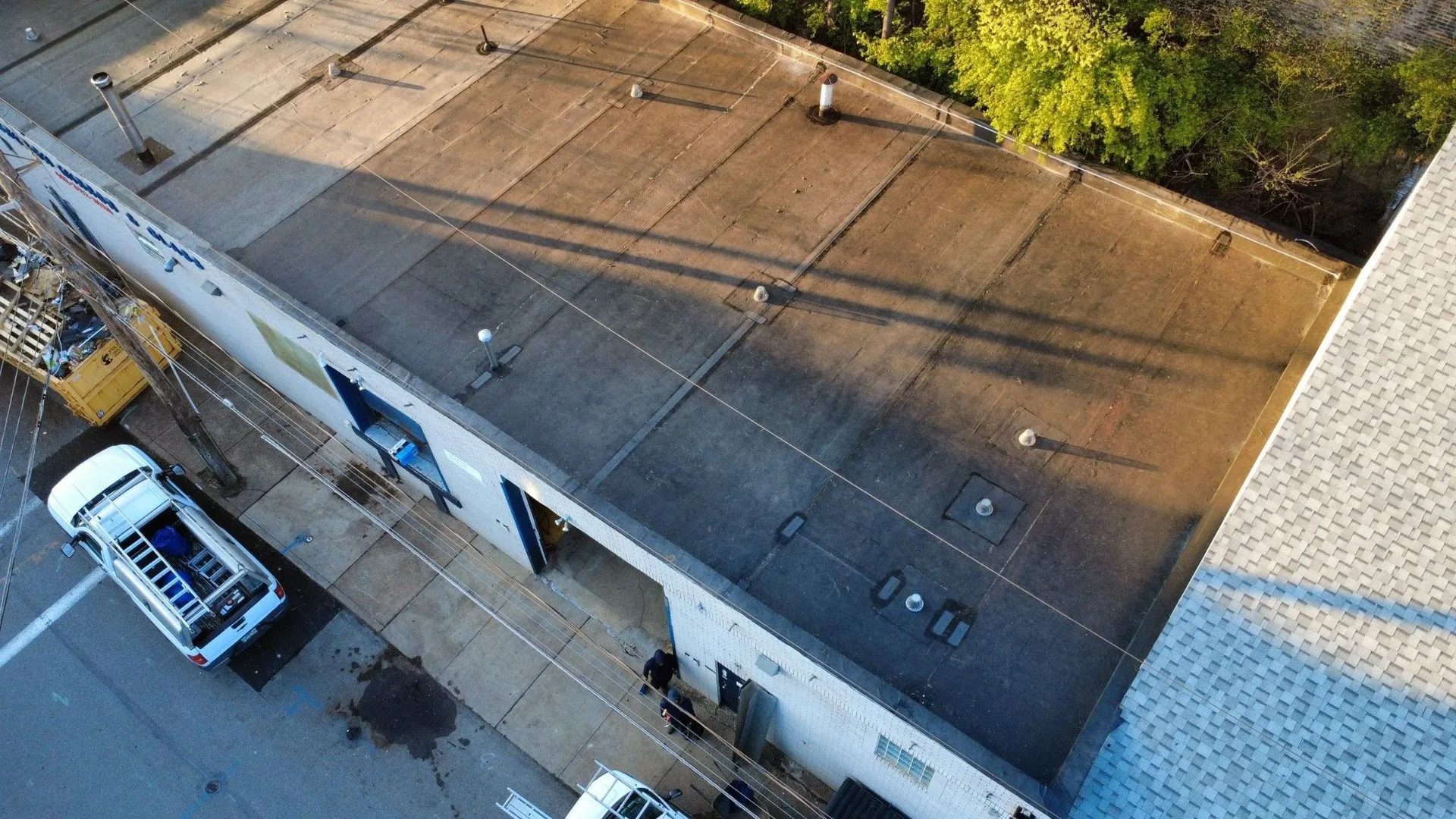
We examine the membrane for blisters, cracks, punctures, and the wear that builds up after years of sun and foot traffic. Small openings are the number one way water gets in, so we mark every single one.
Seams and Flashings
Using a specialized probe, we test the seams where roofing sheets meet to confirm they are sealed tight and not lifting. Flashings around walls and curbs get the same scrutiny, since they tend to fail before the open field of the roof does.
Penetrations
Vents, HVAC curbs, skylights, and pipe boots are the highest-risk spots on the entire surface. We check each one for cracked sealant and loose membrane, because these areas absorb the most thermal stress.
Drainage and Edges
We clear and note debris in gutters, scuppers, and drains, then watch for water that lingers past the 48-hour mark. We also inspect coping and drip edges for rust, loose seals, and wind damage.
Core Sampling and What Lies Beneath

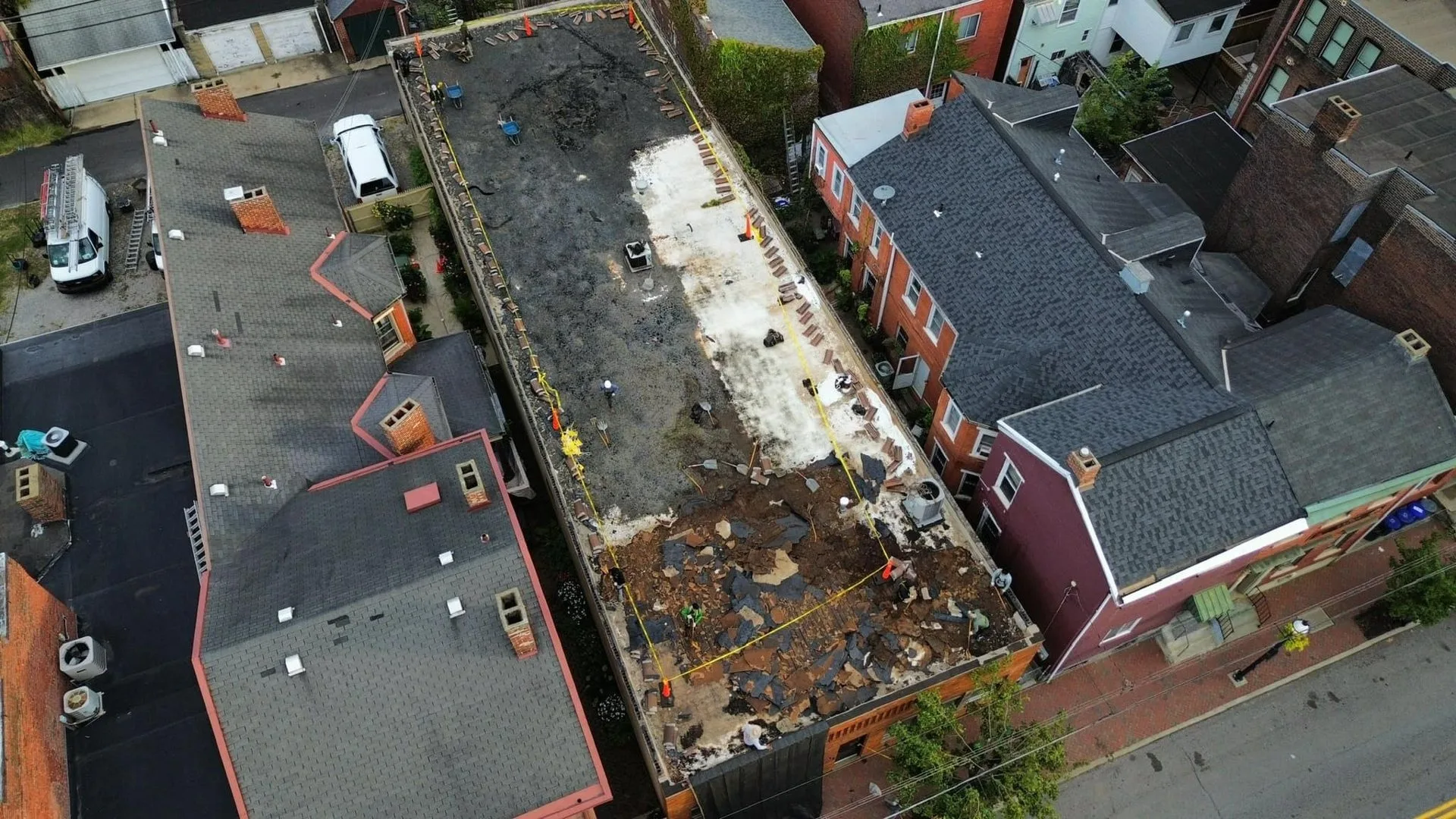
Sometimes the surface looks fine while the layers underneath tell a different tale. When a replacement is on the table, or we suspect trapped moisture, we cut a small circular core sample from the roof. That little plug reveals how many roofing systems are stacked up there, the condition of the insulation, and whether water has soaked into places you cannot see from the surface. We patch and seal the hole right away, so there is no new vulnerability left behind. It is a tiny cut that can save you from a six-figure surprise.
The Report You Actually Get to Keep
After the boots-on-the-roof part wraps up, you get a written summary you can genuinely use. Ours includes an overall condition grade, photo documentation of every problem area, and plain-language recommendations ranked by urgency. Some items are simple housekeeping, like clearing a drain or sweeping debris. Others point toward targeted repairs or a replacement budget you can plan for instead of dreading. A solid roof assessment hands you a roadmap, not a riddle.
Is a Roof Inspection Required for Selling a House?
Strictly speaking, no law forces a roof inspection before a sale in most areas, residential or commercial. That said, skipping one is a gamble I would not take. Buyers, lenders, and insurance carriers increasingly want proof of remaining roof life before they sign anything, and a surprise during due diligence can crater your price or sink the deal entirely. I have watched sellers lose tens of thousands at the closing table over a problem a modest inspection would have caught early. Getting ahead of it protects both your leverage and your sanity.
How Often Does All of This Need to Happen?
For most buildings, I recommend a professional look twice a year, plus a check after any major storm or hail event. Regular commercial roofing maintenance costs a fraction of an emergency repair, and it keeps your warranty in good standing. If you want the full breakdown, our guide on How Often Should a Commercial Roof Be Inspected? lays out timing by roof type and climate. Groups like the National Roofing Contractors Association back the same rhythm, which is simple: catch problems while they are still small. Your roof fights sun, water, and temperature swings every single day, and consistency is what wins that fight.
Here is a quick look at how we weigh what we find:
| What We Find | Typical Action | Why It Matters |
|---|---|---|
| Clogged drain or debris | Clear and monitor | Prevents ponding and added structural load |
| Lifted seam or flashing | Reseal promptly | Stops leaks before interior damage starts |
| Punctured membrane | Targeted patch | Blocks the main entry point for moisture |
| Saturated insulation | Plan replacement | Restores performance and load safety |
What Happens During a Commercial Roof Inspection With Our Team
I’ll be straight with you. Plenty of crews can climb a ladder. What sets us apart is that we treat your building like it is our own, and we tell you the truth even when the truth is cheap. Remember Dave from the warehouse? We could have sold him a re-roof he never needed, but instead we cleared a drain, wrote up the real findings, and earned a customer who still calls us first. That is the standard at Malick Brothers Exteriors, and it is why we believe we are the right partner for your next commercial roof inspection. Give us a call, and we’ll show you exactly what is happening on your roof, with no scare tactics attached.