If you manage or own a commercial property, the roof over your building is one of the most critical investments you will ever make. It protects inventory, equipment, and employees from the elements. Yet most property owners never think much about it until something goes wrong. I have seen this play out dozens of times.
This guide covers the commercial roofing definition, the materials involved, how commercial projects differ from residential work, and commonly asked questions. Whether you are planning a new installation or just trying to understand what sits on top of your building, there is something here for you.
What Does Commercial Roofing Mean?
At its core, commercial roofing refers to the design, installation, repair, and maintenance of roofing systems on non-residential structures. Think warehouses, office buildings, hospitals, retail centers, and factories. These buildings serve business or institutional purposes, and their roofing needs differ from what you would find on a typical home.
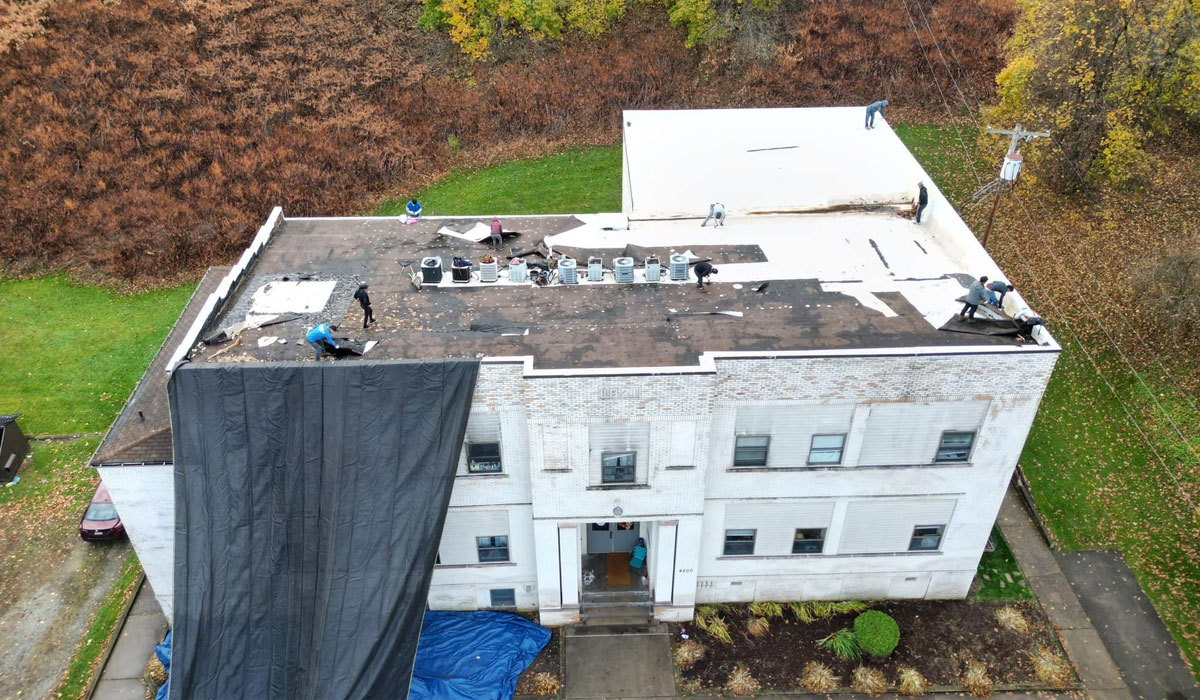
Most commercial roofing systems sit on flat or low-slope structures. That flat profile creates unique challenges around drainage, waterproofing, and load bearing. It also means the materials and techniques are specialized. You will not see a crew nailing down asphalt shingles on a 50,000-square-foot warehouse.
Common Commercial Roof Types and Materials
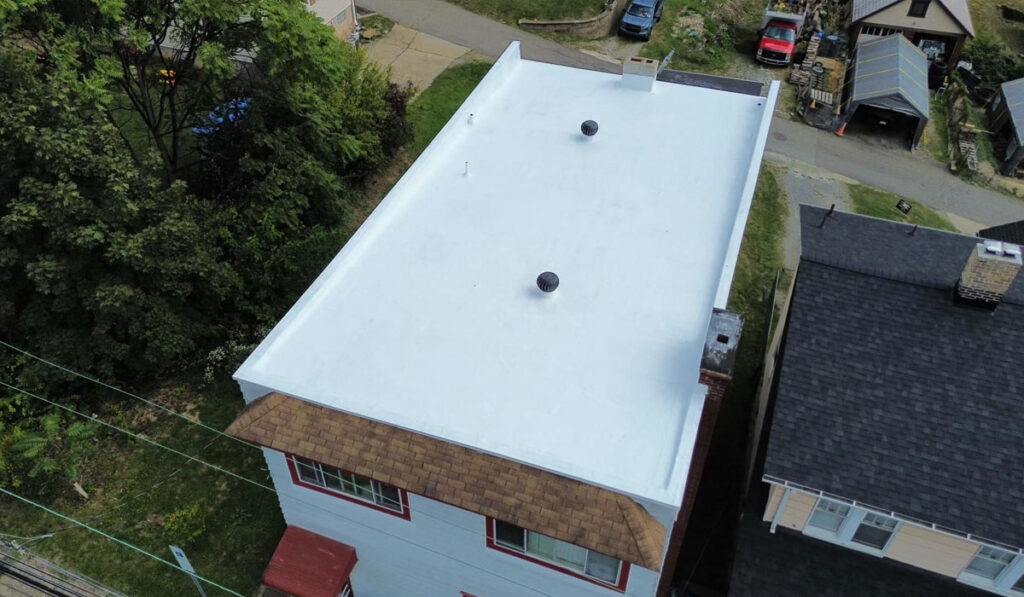
One of the first things people notice when they start researching commercial roof types is the sheer number of options. Each material serves a different purpose, and the right choice depends on your building’s size, climate, budget, and long-term goals.
Single-ply membranes are among the most popular. TPO is energy efficient and heat reflective. PVC offers excellent chemical resistance, making it ideal for restaurants or manufacturing facilities. EPDM, often called rubber roofing, is durable and flexible in colder climates. Modified bitumen performs well in areas with extreme temperature swings. Built-up roofing (tar and gravel) has been around for over a century. Metal roofing rounds out the list, offering longevity for industrial applications.
| Material | Best For | Typical Lifespan |
|---|---|---|
| TPO | Energy efficiency, sun exposure | 20-30 years |
| EPDM (Rubber) | Cold climates, flexibility | 25-30 years |
| PVC | Chemical resistance, restaurants | 20-30 years |
| Modified Bitumen | Temperature extremes | 20-25 years |
| Built-Up Roofing (BUR) | Large flat surfaces, heavy traffic | 25-30 years |
| Metal | Industrial buildings, longevity | 40-60 years |
What Is Considered Commercial Roofing vs. Residential Roofing?
This is probably the question I hear most. The differences go well beyond building size. Residential roofs are typically steep-sloped, designed to shed water quickly through gravity. They use materials like asphalt shingles, clay tiles, or wood shakes.
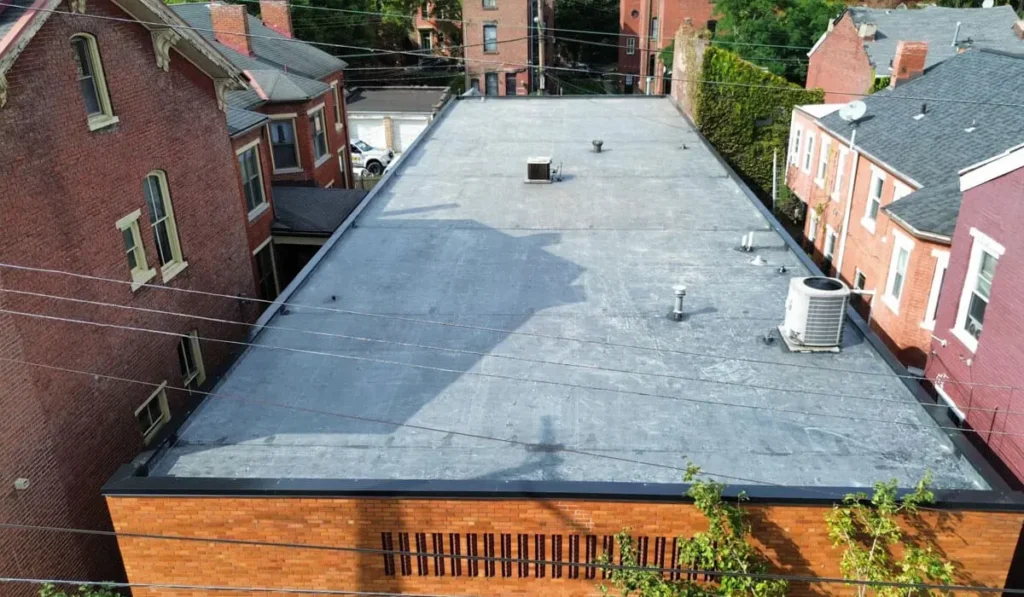
Commercial roofs are flat or nearly flat, which means water does not run off naturally. Proper drainage systems are essential. The surface area is dramatically larger, often exceeding 10,000 square feet, and the roof frequently supports HVAC equipment, piping, and foot traffic. A residential project might wrap up in a day or two. A commercial job can take weeks.
Key Components of a Commercial Roofing System
A commercial roof is not just a single layer of material. It is a system. That system typically includes a structural deck, insulation, a vapor barrier, the membrane, and flashing around penetrations and edges. A failure in one layer can compromise the entire assembly.
Understanding your commercial roofing systems means knowing how these layers work together. Insulation directly affects energy costs. Flashing prevents leaks at vulnerable joints. If you are evaluating options, I recommend reading How to Choose the Right Commercial Roofing System for Your Business for a deeper breakdown.
What Is the 25% Rule in Roofing?
The 25% rule is a building code guideline that applies when a roof needs repair. If more than 25% of a roof’s total area is repaired, replaced, or recovered within a 12-month period, the entire roof or section may need to be brought up to current building codes. This applies to both commercial and residential properties in many jurisdictions.
The intent is practical. Minor patch jobs should not require a full code overhaul. But once the scope crosses that 25% line, authorities want assurance the building meets modern safety standards. For commercial property owners, non-compliance can lead to fines, permit issues, and insurance complications. Always check your local codes, as requirements vary by state.
What Is a Class 3 vs. Class 4 Roof?
Roof impact ratings measure how well materials hold up against hail and debris. These ratings are assigned by Underwriters Laboratories (UL) through the UL 2218 standard, which involves dropping steel balls onto shingles from 20 feet. The results determine a class from 1 through 4.
A Class 3 roof withstands a 1.75-inch steel ball without cracking. A Class 4 roof handles a 2-inch steel ball, making it the highest available rating. For property owners in storm-prone regions, Class 4 is often the smarter long-term investment. Many insurance providers offer premium discounts for Class 4 roofing.
Which Rating Should You Choose?
It depends on your location and risk tolerance. If your building sits in an area with moderate weather, Class 3 may provide enough protection at a lower cost. In regions with frequent hail, Class 4 pays for itself through fewer repairs and lower premiums. The Colorado Roofing Association notes that Class 4 shingles are preferred in hail-prone areas for their durability and insurance savings.
Why Maintenance Matters for Commercial Roofs
A well-installed commercial roof can last decades. But only if it is properly maintained. Neglecting routine inspections is the fastest way to turn a 25-year roof into a 12-year headache.
Inspections should happen at least twice a year and after any major storm. Look for pooling water, membrane damage, and deteriorating flashing. Catching small problems early keeps them small.
How to Pick the Right Commercial Roofing Contractor
Not all roofing contractors are equipped for commercial work. The scale, materials, and safety requirements differ from residential projects. When evaluating contractors, look for experience with commercial roof types specific to your building. Ask about licensing, warranties, and whether they handle permits.
A reputable contractor will explain the commercial roofing definition of your current system, outline what is working, and offer transparent pricing. They should provide references from similar projects. This is not a decision to rush.
Final Thoughts on Commercial Roofing
Commercial roofing is not just about slapping a membrane on a flat surface. It is a layered system that protects your property, your people, and your bottom line. Understanding your options puts you in a stronger position to make decisions that hold up over time.
Whether you are dealing with a new build or just trying to extend the life of your current roof, the fundamentals here should give you a solid starting point. Work with experienced professionals and never underestimate the value of regular maintenance.