A roof replacement checklist keeps you from paying for shingles and getting only shingles. A new roof is a system of layers, from the wood deck up to the ridge cap, and every layer either shows up in the written estimate or it does not. This guide covers what a complete roof replacement should include, what to check after the crew leaves, and which documents you should have before the final payment.
We are Malick Brothers Exteriors, a family owned roofing company based at 500 Perry Highway in West View. We have handled roof replacement in Pittsburgh and the North Hills since 2022, and the list below is the same one we walk through with every homeowner before we tear off a single shingle.
What Should a Roof Replacement Include?
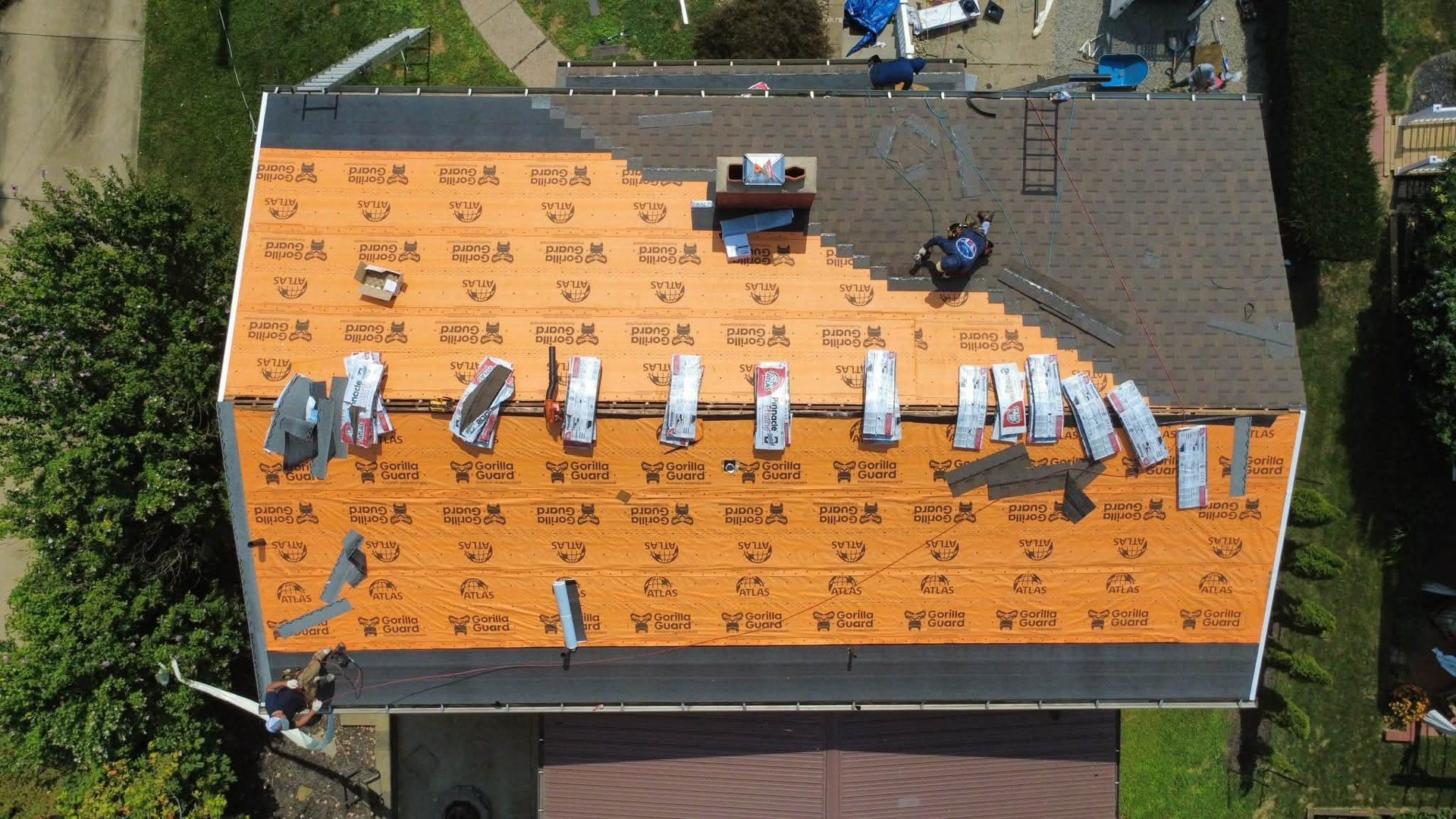
A true replacement strips the roof to the wood deck and rebuilds every layer. If an estimate skips any of these items, ask why.
- Full tear off of all existing shingles, underlayment and old flashing, down to bare decking.
- Deck inspection and repair, with rotted or soft sheets of plywood or OSB replaced before anything goes on top.
- Ice and water shield at the eaves, in the valleys, and around every chimney, pipe and skylight.
- Synthetic underlayment over the rest of the deck.
- Drip edge metal along the eaves and rakes.
- Starter strip shingles along the eaves and rakes.
- Field shingles (or metal panels) installed to the manufacturer nailing pattern.
- New flashing: step flashing and counter flashing at walls and chimneys, new pipe boots, and valley metal where the design calls for it.
- Ventilation: ridge vent or roof vents for exhaust, and open soffit intake so the attic can breathe.
- Ridge cap shingles over the ridge vent and hips.
- Cleanup, including a magnetic nail sweep of the lawn and driveway.
- Warranty paperwork for both materials and workmanship.
Layer by Layer: What Each Part of a New Roof Does
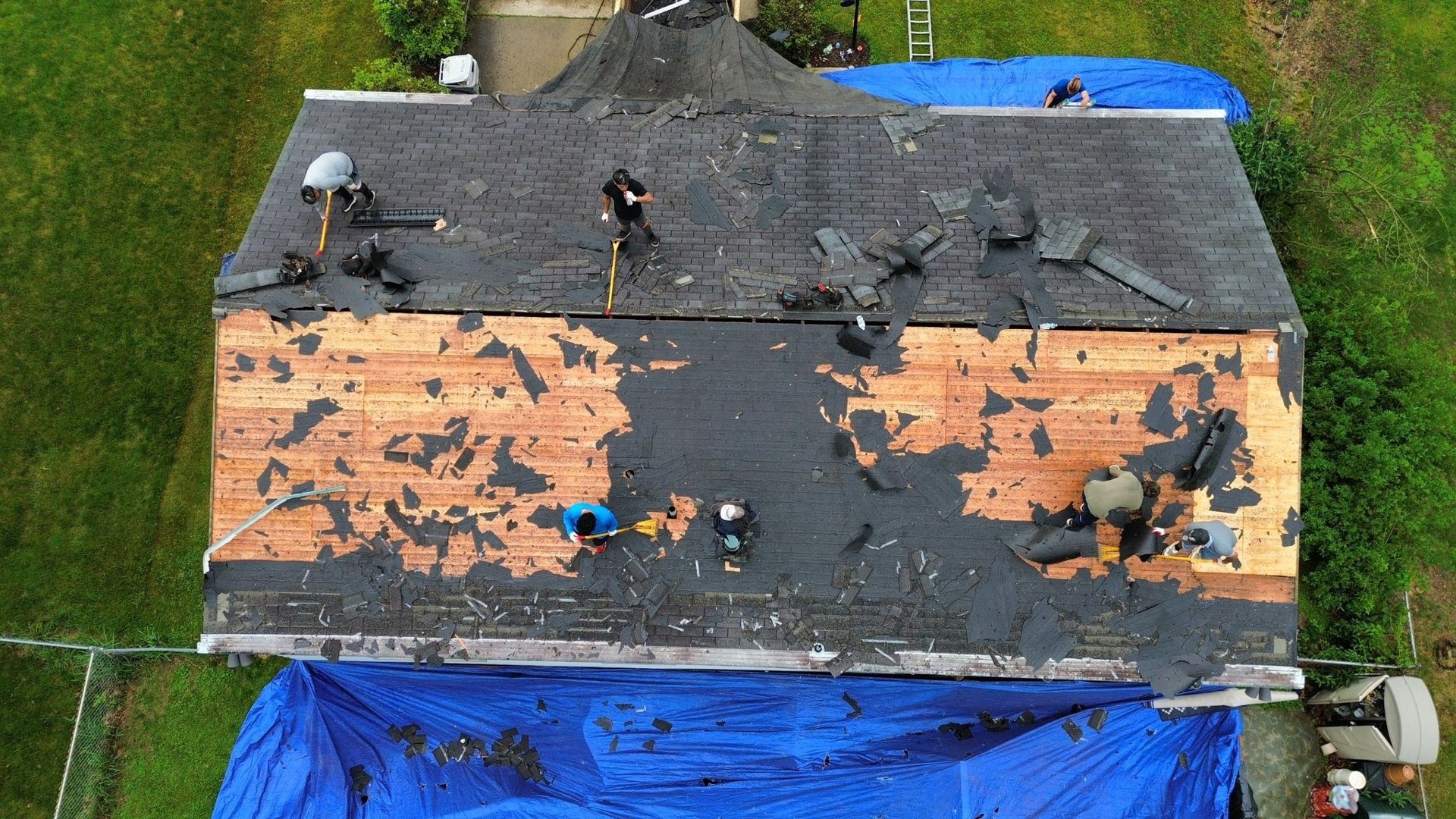
Wood decking
The deck is the plywood or OSB the whole roof fastens to. Newer Pittsburgh homes have half inch sheets; older homes in Bellevue, West View and Squirrel Hill often have plank decking with gaps between boards. Once the old roof is off, the crew should walk every section looking for soft spots and water stains. Damaged sheets get replaced, not covered. On a Morningside job we re sheeted the entire roof with new decking because the old boards could not hold a nail.
Ice and water shield
Ice and water shield is a self adhering rubberized membrane that seals around every nail driven through it. It belongs at the eaves (where snow melt refreezes and backs up under the shingles), in every valley, and around chimneys, skylights and pipes. In Western Pennsylvania the building code requires it at the eaves on most sloped roofs, and we run it further up the roof than the minimum on low pitches and north facing slopes that hold snow.
Underlayment
Underlayment covers the rest of the deck between the ice and water shield. Synthetic underlayment has replaced felt paper on nearly every job because it is lighter, tears less and holds up if a storm hits before the shingles are on. On complete Atlas roof systems we install Atlas underlayment so the whole assembly qualifies for the Atlas 50 year warranty we can offer as an AtlasPro+ Platinum Select contractor.
Drip edge and starter strip
Drip edge is the L shaped metal along the roof edges that kicks water into the gutter instead of behind the fascia. Starter strip is a sealed shingle course along the eaves and rakes that locks the first row down against wind. Both get skipped on cheap bids and both are required by shingle manufacturers for the warranty to hold.
Shingles or metal panels
The visible layer. For asphalt, we install Atlas lines such as Pinnacle Pristine and StormMaster Shake with Scotchgard algae protection, which keeps black streaks off north facing slopes. Nail placement matters as much as the shingle: nails go in the manufacturer nail line, driven flush, four to six per shingle depending on wind rating. Overdriven, underdriven or high nails are the most common defect we find on other companies' work. Compare your options on our roof materials page.
Flashing
Flashing is the metal that seals every place the roof changes direction or something pokes through it. A replacement should include new flashing, not reused flashing, at these spots:
| Flashing type | Where it goes | What it does |
|---|---|---|
| Drip edge | Eaves and rakes | Directs water into the gutters and protects the fascia |
| Step flashing | Where the roof meets a wall or dormer | Layers with each shingle course so water sheds down and out |
| Counter flashing | Chimneys and masonry walls | Covers the top of step flashing and is cut into the mortar joint |
| Pipe boots | Plumbing vents | Seals round penetrations; rubber boots crack, metal lasts longer |
| Valley metal or woven shingles | Where two roof planes meet | Carries the heaviest water flow on the roof |
| Vent and skylight flashing | Bath fans, kitchen exhaust, skylights | Seals factory curbs and mechanical penetrations |
On masonry chimneys we often use copper, which outlasts the shingles around it.
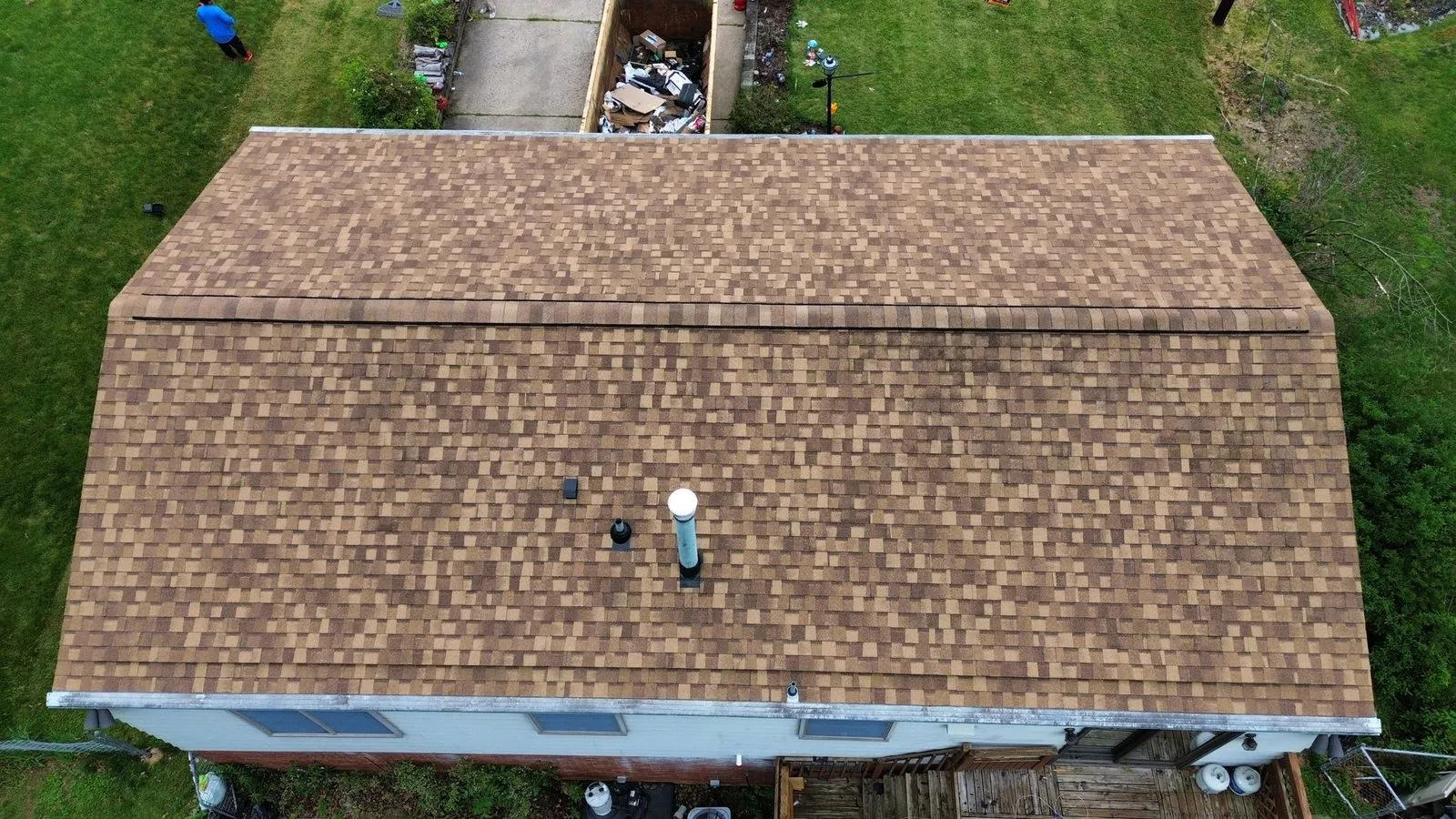
Ventilation
An attic needs intake at the soffits and exhaust at the ridge. Without both, summer heat cooks the shingles from underneath and winter moisture condenses on the deck. A replacement checklist should name the exhaust product (ridge vent or box vents) and confirm the soffit vents are open, not painted shut or packed with insulation. If your soffit is solid, see our soffit and fascia page; adding vented panels is often part of the roof job.
Gutters
Gutters are not part of every roof replacement, but a tear off is the right time to check them, since sagging runs, old spikes and undersized downspouts show up once the drip edge comes off. We install 5 inch and 6 inch seamless K style gutters, and on a Mars project in August 2026 the new roof, gutters and skylights went in the same week. Details are on our gutter services page.
What Is the 25 Percent Rule in Roofing?
The 25 percent rule comes from the Florida Building Code, which required a full replacement whenever more than 25 percent of a roof section was repaired within 12 months. It is not a Pennsylvania rule. Pennsylvania municipalities follow the International Residential Code, and the rule that matters here is in IRC Chapter 9: a roof cannot be recovered with a new layer when two or more layers already exist, or when the existing roof or deck is water soaked or deteriorated. Many older Pittsburgh houses already carry two layers, so a tear off is required, not optional.
Checklist Before the Crew Arrives
- Written estimate listing every layer above, the shingle brand and line, underlayment type, ice and water coverage, and flashing details.
- Proof of the contractor's Pennsylvania Home Improvement Contractor registration. You can look up any contractor on the PA Attorney General HIC search. Ours is PA174918.
- Certificate of liability and workers compensation insurance.
- Permit, if your municipality requires one for reroofing (many North Hills boroughs do).
- Dumpster placement and a plan to protect the driveway, landscaping and air conditioning unit.
- Decking replacement terms: the per sheet allowance and how extra sheets are approved.
- Start date, expected duration, and who the on site contact is.
Inside the house, take pictures off the walls, cover anything stored in the attic, and move cars out of the driveway. Tear off shakes the whole structure.
What to Check After Having a New Roof Installed
You do not need to climb the roof. Most of this is visible from the ground, from a ladder at the eaves, or from inside the attic.
From the ground
- Shingle courses run straight and parallel to the eaves, with no waves or stair stepping.
- Shingles overhang the drip edge by roughly half an inch to three quarters of an inch, enough to shed into the gutter without curling.
- Ridge cap is continuous and lies flat, with no exposed nail heads.
- Valleys are clean, with no granule piles or scraps.
- No shingles are lifting, and the color is consistent across every slope.
At the eaves and penetrations
- Drip edge is present along every edge and the gutters are reattached and pitched toward the downspouts.
- Pipe boots are new, sit flat, and are not buried under a blob of caulk.
- Chimney step flashing is tucked under each course and counter flashing is set into the mortar joint, not simply caulked to the brick face.
- Nails are flush, not exposed on the shingle surface except where sealed at the final ridge cap.
In the attic
- Daylight at the ridge vent is normal; daylight anywhere else is not.
- No nails sticking through the deck in a random pattern, which signals nails that missed the rafters.
- Soffit vents are open and the insulation is pulled back from them.
- After the first heavy rain, check for damp spots on the underside of the deck and around every penetration.
On the ground and in the paperwork
- Lawn, beds and driveway swept with a magnet. Run your own magnet along the drip line; a handful of nails is normal, a bucket is not.
- Gutters cleared of tear off debris and granules.
- Signed workmanship warranty from the contractor and the manufacturer warranty registration for the shingle system.
- Final invoice matching the estimate, with any decking replacement itemized.
- Permit closed out by the municipal inspector if one was pulled.
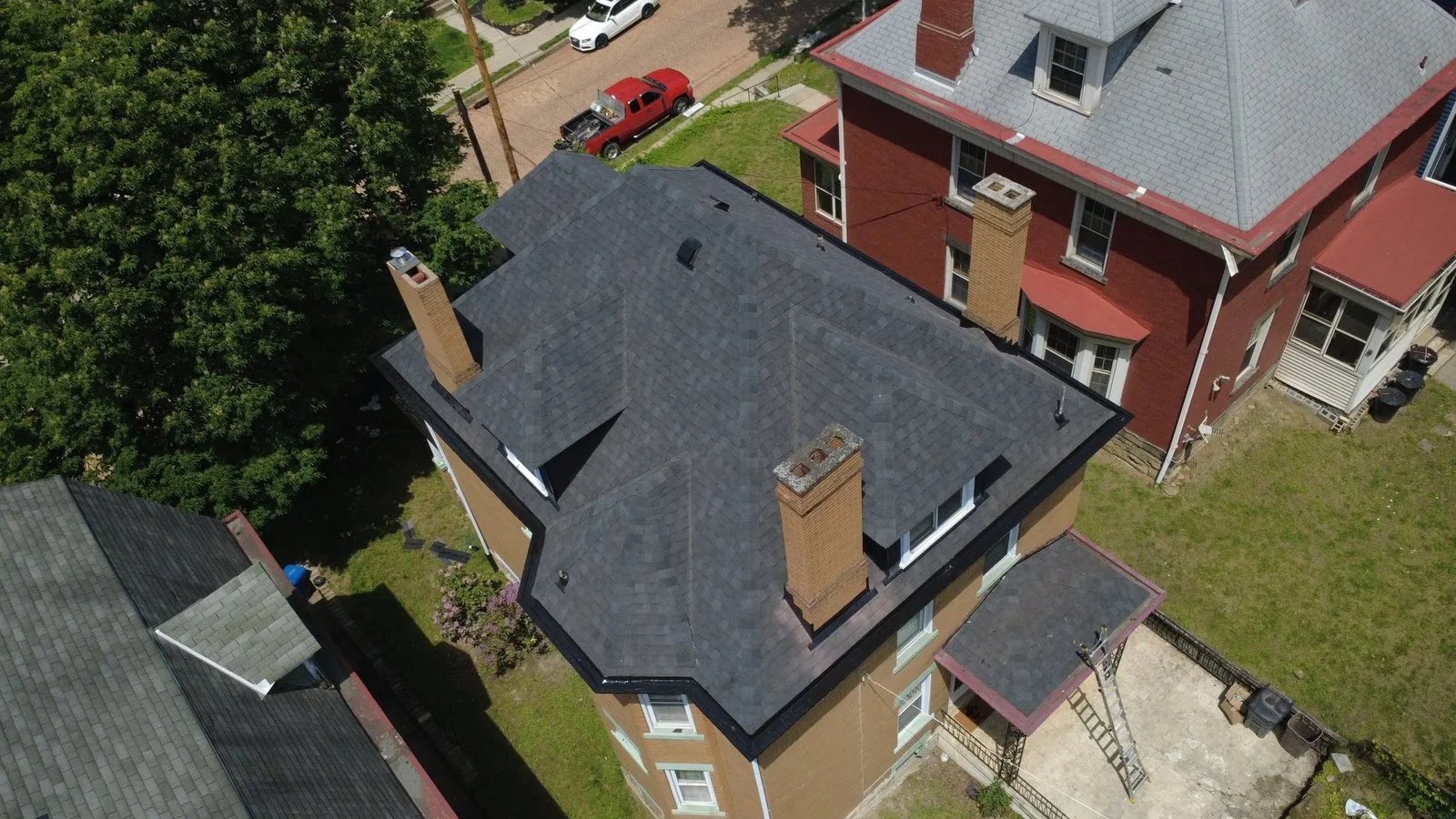
If anything on this list fails, call the contractor before the final payment, not after. We photograph every stage of every roof so homeowners can see the deck, underlayment and flashing before the shingles cover them. If you are unsure about a roof someone else installed, our roof inspection service covers every item above.
What Drives the Cost of a New Roof?
Labor is the largest share of most roof replacements, and the roof itself sets the labor: steep pitches, multiple valleys, dormers, chimneys, skylights and a second layer to tear off all add time. Decking replacement cannot be fully known until the old roof is off, which is why a good estimate states a per sheet price up front. Material choice comes next, from architectural shingles to designer shake profiles to standing seam metal. We give a free written estimate that itemizes all of it, and financing is available.
Roof Replacement Checklist FAQ
What should be included in a roof replacement?
Full tear off, deck inspection and repair, ice and water shield, synthetic underlayment, drip edge, starter strip, new shingles or panels, new flashing at every wall and penetration, balanced ventilation, ridge cap, cleanup with a magnetic sweep, and written warranties for workmanship and materials. If an estimate leaves any of these out, ask the contractor to add them in writing.
What are the signs of a poorly installed roof?
Wavy shingle courses, exposed nail heads, shingles that do not overhang the drip edge, caulk used in place of flashing at chimneys and walls, missing starter strip at the rakes, and nails visible through the deck in the attic. Leaks at the first rain and granules piling in the gutters within weeks are also warning signs that call for a second opinion.
Should I stay home during a roof replacement?
You do not have to, but someone should be reachable by phone. Decking surprises come up once the old roof is off and the contractor needs a quick approval to replace sheets. Pets and young children are usually happier elsewhere for the day, since tear off is loud and the yard is a work zone until cleanup is done.
How long does a new roof inspection take?
A walk around with the contractor at the end of the job takes 20 to 30 minutes. Your own attic and ground check takes about the same. A formal inspection of a roof installed by another company, where we check nailing, flashing and ventilation up close, usually takes under an hour for an average Pittsburgh home.
Does a new roof need a permit in Pittsburgh?
It depends on the municipality. The City of Pittsburgh and many surrounding boroughs and townships require a building permit for a full reroof, while some only require one if structural work is involved. Your contractor should know the local rule and pull the permit as part of the job. Ask who is pulling it before work starts.
Get a Written Estimate That Covers Every Layer
We are a family owned, BBB A+ accredited roofing company based in West View, and we have installed roofs across Pittsburgh and the North Hills from Bellevue and Ross Township to Allison Park, Cranberry Township and Mars. Our estimates list every item in this roof replacement checklist, and we photograph each stage so you can see what went on your roof. Contact us for a free written estimate.